
From the story to daily life
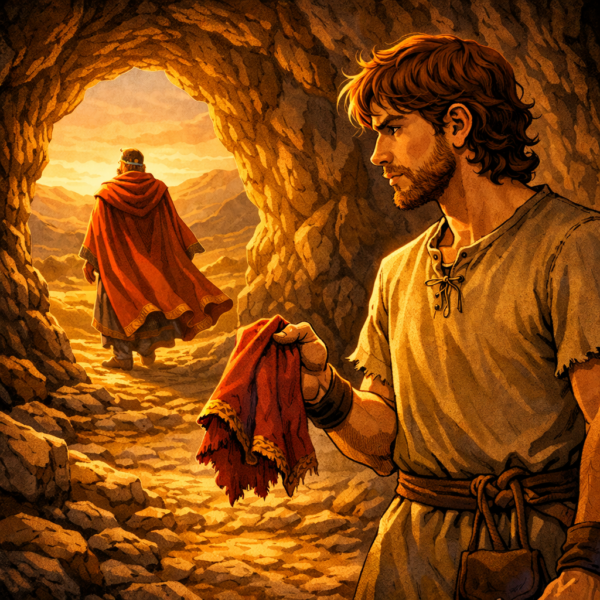
Saul entered a cave near the sheep pens at En Gedi. He had come into the wilderness hunting David. Now, without knowing it, he had stepped into the very place where David and his men were hiding.
Story and reflection based on 1 Samuel 24. The biblical events below are retold in our own words.
When everyone calls it an opportunity
The men around David saw their chance. Saul was within reach. They spoke as though God had handed David his enemy to deal with however he wished. After being pursued through the wilderness, here was an opening they urged him to take.
David moved close enough to cut a corner from Saul’s robe without being noticed. Then his conscience troubled him. Even this act against the king weighed on him. David told his men that he would not attack Saul, who was still the Lord’s anointed (1 Samuel 24:4-6).
The pressure in that moment came from his own companions. These were the men sharing his hiding place, and David had to answer their urging. He could not control what Saul would do next. He did have responsibility for what happened on his side of the cave.
David restrained his men and would not allow them to attack. Saul rose and left alive. Before David ever wore a crown, he was setting a direction for the people who followed him. In this moment, that meant stopping an act they wanted to carry out.
A piece of cloth and a truthful answer
After Saul left, David came out and called to him. He bowed before the king, then showed him the piece of robe. David had been close enough to harm him and had chosen to spare him.
He also named the wrong being done to him: Saul was hunting his life, although David had not wronged him. David appealed to the Lord to judge between them and deliver him. He placed his cause before God while refusing to take revenge into his own hands (1 Samuel 24:9-15).
Saul wept and acknowledged that David had treated him better than he deserved. But the chapter does not end with David returning to Saul’s household. Saul went home, and David and his men went back to the stronghold. Restraint and honest speech had not required David to abandon a place of protection.
One way to understand his leadership here is as power brought under responsibility to God. David corrected his own course, restrained his companions and told the truth to the person threatening him. The opportunity to act did not decide what was right.
The direction you give others
You may never lead a group through a wilderness, but people can still take their cue from you. A colleague makes a mistake, and the conversation turns sharp. A family disagreement becomes a contest to gather supporters. You have information that could embarrass someone, and others encourage you to use it.
These are moments to pause before God and consider what your influence is doing. Is it helping people face the truth fairly, or making it easier to be cruel? You can slow a conversation, refuse to join the ridicule or move a necessary correction somewhere it can be heard without humiliation.
Sometimes the first person you need to lead is yourself. You may already have spoken too quickly or encouraged the wrong response. Admit it. Correct what you can. David’s troubled conscience became a turning point; recognising a mistake can become the beginning of a more responsible choice.
Restraint also belongs alongside safety and accountability. A person’s position or religious authority does not make harm acceptable. You can refuse revenge while naming abuse, seeking help and keeping necessary distance. Ask God for wisdom to protect people as well as for patience with your own anger.
Pause and reflect
Where are other people taking their cue from you? What might change if you used that influence to make room for truth, restraint and someone’s dignity today?
A prayer for responsible leadership
God, help me notice the influence You have entrusted to me. Give me the humility to correct myself, the courage to resist harmful pressure and the wisdom to speak truth without cruelty. Teach me to protect those in my care and to trust You with what I cannot control. Amen.
