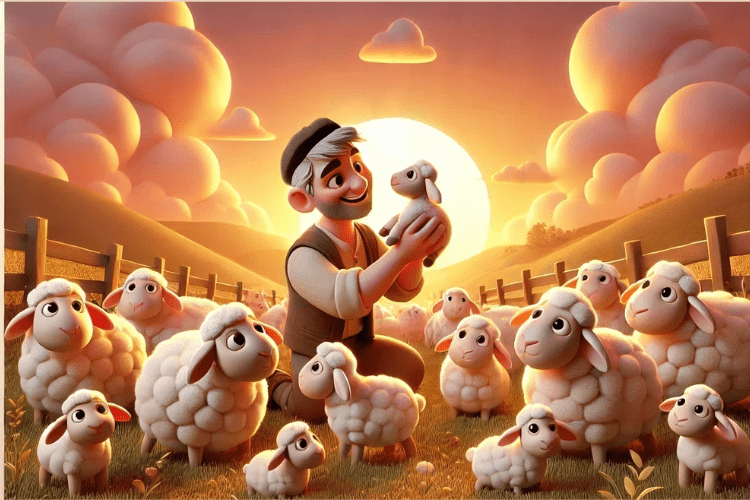
I used to drive past a sheep pasture on the way to my parents’ house, and I always slowed down when I saw them near the road. Not because they were doing anything interesting – they almost never were. They were just grazing, heads down, moving slowly together in whatever direction the shepherd led. What caught me was the simplicity of it. They did not seem to be working at following. They just followed. And there was something about watching that which quieted something in me that I did not know was noisy.
We are the most self-directed generation in history, and we are also, by most measures, the most anxious. Maybe those two things are connected.
What Sheep Can Teach Us
Sheep have an almost universally unflattering reputation. They are cited as proof of mindless conformity, hapless helplessness, and a general failure of independent thinking. But the science tells a more interesting story. Sheep have excellent facial recognition – they can remember up to fifty individual sheep faces and fifty human faces for up to two years. They form strong social bonds with preferred companions. When separated from their flock, they experience genuine stress measurable in elevated cortisol and heart rate. And crucially, they learn to recognize and respond to the specific voice of their shepherd over every other voice in a crowded pasture.
That last detail is not a small thing. In the ancient Near East, shepherds did not keep their flocks in enclosed pens. Multiple flocks would often share a common watering hole or resting area overnight, their sheep completely intermingled. In the morning, each shepherd would simply call, using a specific sound or song unique to that flock – and each flock would separate itself from the others and follow its own shepherd out. No physical sorting. No force. Just a voice, and sheep who knew it.
Sheep also have a very specific kind of vulnerability that is easy to overlook. They cannot right themselves once they fall onto their backs. A sheep that rolls over – from sitting in a hollow, or simply from being too heavily fleeced – will die within hours if no one comes. The carbon dioxide builds up, the organs are compressed, the legs cannot gain purchase to roll back. The shepherd knows to watch for “cast” sheep – those lying on their backs, legs in the air, entirely helpless. The remedy is simple: someone has to come and set them on their feet. They cannot do it themselves.
God chose sheep as the primary image for his relationship with his people – not because we are stupid or weak, but because the dynamic is true. We are creatures who thrive under care, who know the voice of the one who tends us, who get into trouble we cannot escape without help, and who find peace not in total independence but in trusting the One who knows the path. There is no shame in that. There is, actually, enormous relief.
The Biblical Mirror
Psalm 23 is possibly the most memorized passage in scripture – and it is worth asking why. “The Lord is my shepherd, I lack nothing. He makes me lie down in green pastures, he leads me beside quiet waters, he refreshes my soul.” This is not passive language. The shepherd makes, leads, refreshes – this is active, attentive care. The psalmist’s role is to receive it. To lie down in the green pasture. To be led beside the quiet water. The rest that this image offers is not laziness. It is trust. The sheep does not have to find its own pasture or purify its own water. The shepherd already knows where those are.
David, who wrote this psalm, had actually been a shepherd. He knew what it felt like to carry a lamb on his shoulders home from a ravine (Luke 15:5 echoes this image). He knew the weight of responsibility for creatures that genuinely could not survive without him. When he called God his shepherd, he was not using a vague metaphor. He was making a very specific claim: God sees me when I am cast. God knows my name. God will come into the valley for me and I do not have to be afraid there.
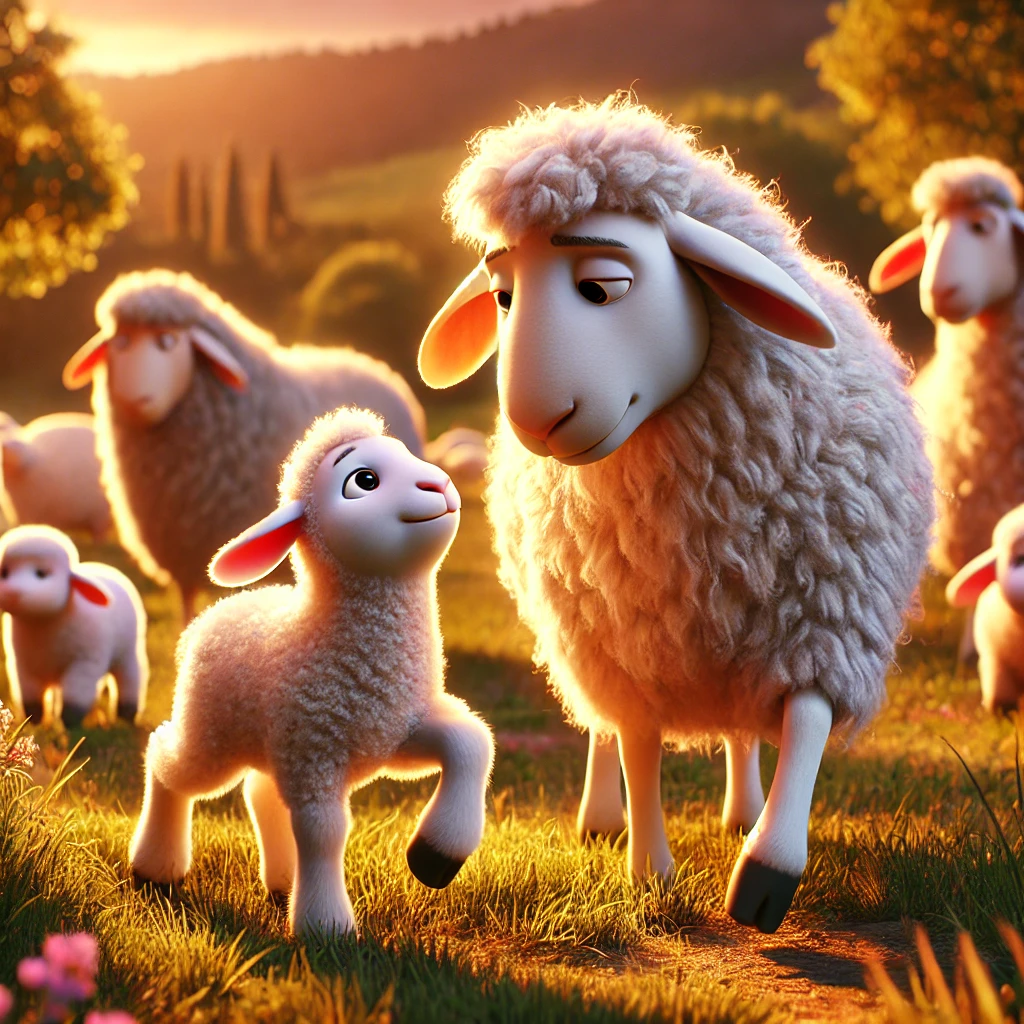
John 10:27 adds the relational depth that the Psalm implies: “My sheep listen to my voice; I know them, and they follow me.” The knowing goes both ways. The sheep knows the shepherd’s voice. The shepherd knows each sheep by name. This is not management at scale. It is personal. Jesus is not running a flock of thousands that he loosely oversees. He knows the one that wanders (Matthew 18:12-14), leaves the ninety-nine, and comes looking. That kind of particularized love is what makes trusting the Shepherd not just safe, but the most rational response available.
For Your Kids
Ages 5-7
Young children are developmentally wired to depend on caregivers, and they generally do not find this shameful – yet. This is a great age to cement the image of God as a safe Shepherd before the world starts telling them that dependence is weakness. Read the story of the lost sheep together (Luke 15). Emphasize: the shepherd left everyone else to come find just one. “That sheep is you. God thinks you are worth leaving everything for.” Let them sit with the safety of being known and sought by name. That emotional foundation matters for everything that comes later.
Ages 8-10
Kids this age are beginning to feel the cultural pressure toward self-sufficiency – figuring it out themselves, not asking for help, being independent. This is a tender moment to offer a different framework. “Did you know that sheep are really good at recognizing faces and voices – even better than we often give them credit for? The thing they are not good at is getting back on their feet alone if they fall. And that is not a flaw. God designed it so they need the shepherd.” Ask your child: “Is there something you have been trying to handle by yourself that you could ask God – or someone who loves you – to help with? What does it feel like to ask for help?”
Ages 11-13
Preteens are pushing hard for autonomy, which is healthy and right. But this age also brings the first real encounters with situations genuinely beyond their ability to manage – social cruelty, personal failure, fear about the future. This is where Psalm 23 becomes more than a children’s memory verse. Walk through it line by line with your preteen and ask them to be honest: which part do they actually struggle to believe? “He leads me in paths of righteousness” – do they trust God’s direction for their life? “Though I walk through the darkest valley I will fear no evil” – is there a dark valley they are in right now? Let the psalm be a real conversation rather than a recitation.
This Week’s Challenge
One Action
Practice listening this week. Each morning, before the day begins, take five minutes as a family or individually to sit quietly and ask: “Shepherd, what do You have for me today?” It does not need to produce a dramatic answer. The practice of pausing to listen – rather than charging into the day on your own direction – is itself the discipline. Sheep know the voice because they spend time hearing it.
One Conversation Starter
Multiple flocks would mix together at the watering hole, and in the morning each sheep would separate and follow only its own shepherd’s voice. In a world full of loud voices telling you which way to go, how do you get good enough at hearing God’s voice that you can pick it out from all the others?
One Verse
“The Lord is my shepherd, I lack nothing.” – Psalm 23:1
Family Activity
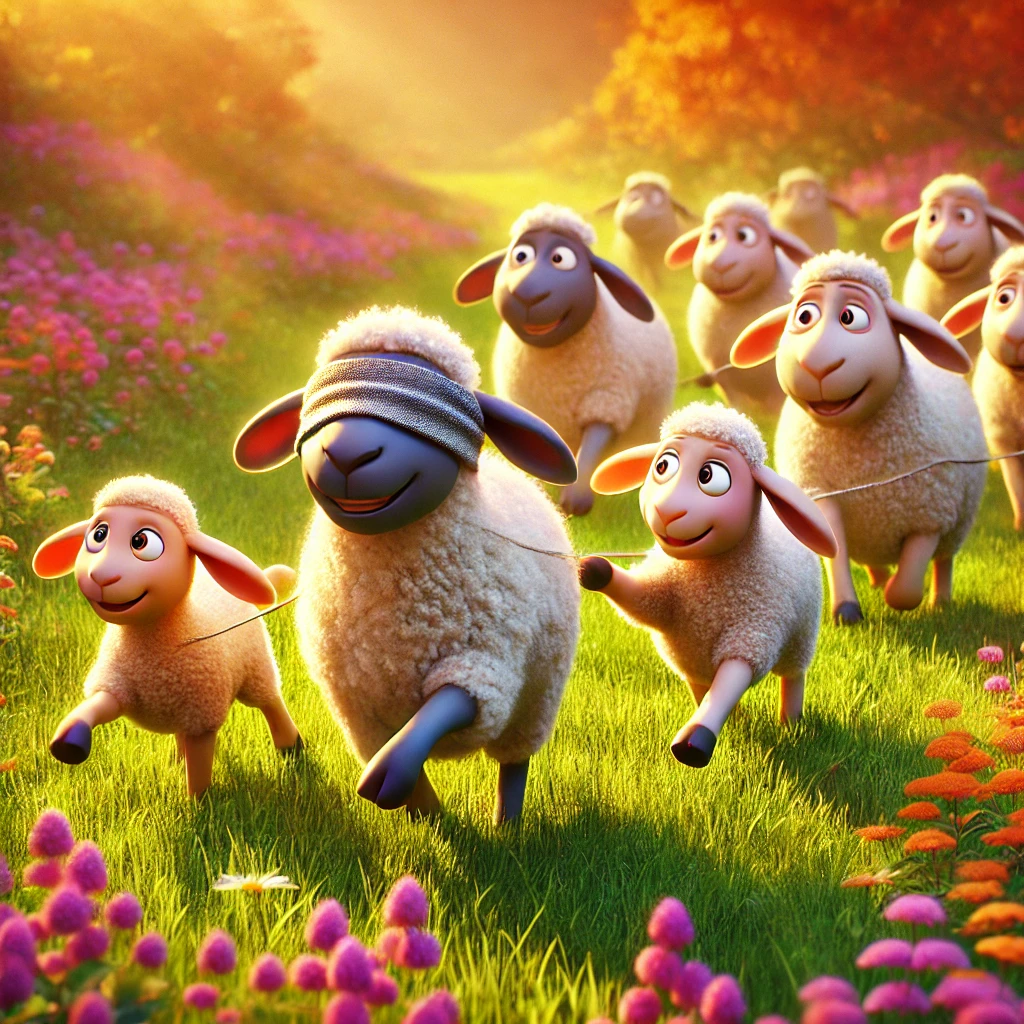
Read Psalm 23 slowly together – each person taking one verse or phrase. After reading, give everyone a piece of paper and ask them to rewrite the psalm in their own words, in first person, as if it were a letter from God to them specifically. Young children can draw it. Older kids can write it out. Parents should do it too. When everyone is done, share what you wrote and listen carefully – sometimes the places where children personalize it reveal something important about where they are with God.
Then discuss these questions together:
Discussion Starters
- The shepherd makes the sheep lie down in green pastures – the sheep does not find them on its own. Is there an area of your life where you keep trying to find your own green pasture? What would it look like to let the Shepherd lead you there instead?
- Sheep recognize their shepherd’s voice among hundreds of other voices. What helps you recognize God’s voice? What makes it harder to hear?
- A cast sheep cannot get back on its feet alone – it will die without help. When was the last time you were “cast” – stuck in a situation you could not get out of on your own? Who came to help you? How did that feel?
- Jesus left the ninety-nine to find the one lost sheep. What does it do to your heart to know that you are worth that kind of individual pursuit? Does that feel easy to believe or hard?
- “I lack nothing” – do you actually believe that about your life right now? What would change if you did?
A Prayer to Close
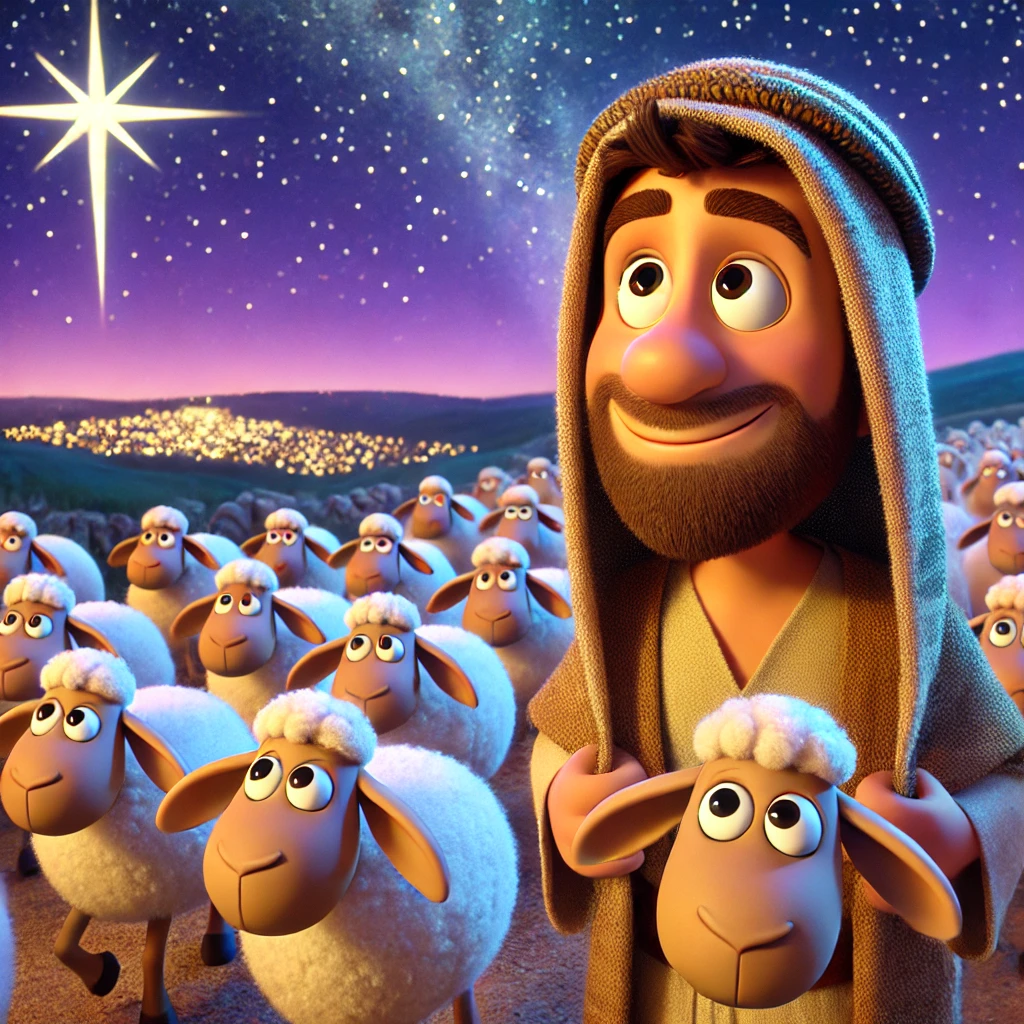
Good Shepherd, thank You for knowing our names and for searching when we wander. Thank You that Your care for us is not distant or general – that You know the specific valley we are walking through and the specific fear we are carrying. Teach our children to know Your voice so well that they can pick it out from every other voice that calls for their attention. Teach us to lie down in Your green pastures – to receive rest instead of always striving. And when we are cast, when we are stuck on our backs and cannot help ourselves, remind us that You are already on Your way. Amen.
One Last Thing
I still slow down when I pass that sheep pasture. Something about the scene has never stopped being instructive. The sheep are not anxious about where the next meal is coming from. They are not trying to negotiate the route. They are following the shepherd, and the shepherd knows the path, and somehow that is enough for them. The theology of that is simple and inexhaustible: the creature who trusts the One who made it is the creature at peace.
We will spend our whole lives learning to receive this kind of care. Our children are watching us to see if we actually believe it. The most powerful thing you can model for them is not that you have it all figured out – it is that you know the Shepherd’s voice and you are following it. That is the whole thing. That is everything. Want to learn more about these amazing creatures? Explore sheep at National Geographic Kids.
Want more stories like this? Explore our Character Tales for more animal stories that teach real virtues, or grab a free printable activity to take the lesson further.