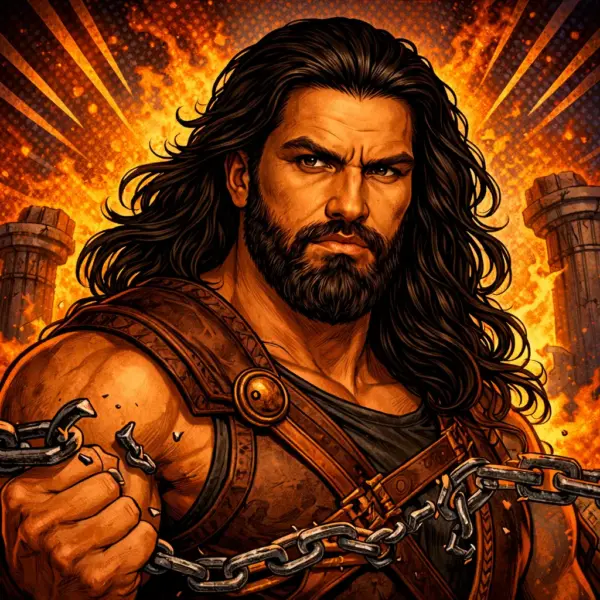

Moses's Journey
Pharaoh had commanded that every Hebrew boy be thrown into the Nile. When Moses’s mother could no longer hide her three-month-old son, she placed him in a papyrus basket coated with tar and pitch and set it among the reeds along the riverbank.
Moses’s sister watched from a distance. When Pharaoh’s daughter discovered the child, she recognised that he was a Hebrew baby and felt compassion for him.
Moses’s sister offered to find a Hebrew woman to nurse him. Moses’s own mother was then paid to care for him until he was old enough to be taken to Pharaoh’s daughter, who adopted him and named him Moses.
Many years later, after Moses had fled Egypt and settled in Midian, God called him from a burning bush and sent him back to Egypt.
Who Was Moses?
Moses was born to Levite parents during Israel’s oppression in Egypt. Pharaoh’s daughter adopted him after finding him in the Nile, and Acts says that Moses was educated in all the wisdom of the Egyptians and became powerful in speech and action.
Scripture does not list the subjects Moses studied, call him a prince or describe his daily life in Pharaoh’s household.
When Moses was forty, he saw an Egyptian beating a Hebrew. Moses looked around, killed the Egyptian and hid his body in the sand. The following day, a Hebrew man confronted Moses about the killing.
When Pharaoh learned what had happened, he tried to kill Moses. Moses fled to Midian, where he helped the daughters of a Midianite priest, married Zipporah and became a shepherd.
Approximately forty years later, when Moses was eighty, God called him from the burning bush.
Acts states that Moses was educated in Egyptian wisdom, but it also calls him “powerful in speech and action.” That makes the unsupported claim that he stuttered particularly inappropriate. See Acts 7:20–30.
Moses’s Journey
Moses recognised the suffering of his people, but killing the Egyptian and hiding his body was not presented as a leadership method children should imitate.
Seeing injustice does not give someone permission to attack another person, take revenge or try to manage a dangerous situation alone. Children who witness abuse or violence should move to safety and tell a trustworthy adult.
Moses later protected and led people through the authority and instructions God gave him – not through personal violence.
God told Moses that He had seen the Israelites’ misery, heard their cries and was concerned about their suffering. God said that He had come down to rescue them and was sending Moses to Pharaoh.
Moses raised several objections:
- Who am I to go?
- What should I say God’s name is?
- What if the Israelites do not believe me?
- I am slow of speech and tongue.
- Please send someone else.
God promised to be with Moses, revealed His name, gave Moses the message and signs, and promised to help him speak.
When Moses continued asking God to send someone else, God became angry. God appointed Aaron to help speak, but Moses still had to accept his responsibility.
Scripture says Moses was slow of speech and tongue. It does not diagnose him with a stutter.
This is accurately recorded in Exodus 3–4.
After Pharaoh repeatedly refused God’s command, God sent a series of plagues upon Egypt. Moses and Aaron communicated God’s instructions, but the power and deliverance belonged to God.
On the night of Passover, judgment fell upon Egypt’s firstborn while the Israelite households followed God’s instructions concerning the lamb’s blood.
The Israelites then left Egypt. Exodus reports about 600,000 men on foot, besides women and children, as well as other people who travelled with them.
The exact total population is not stated.
When the Israelites were trapped between Pharaoh’s forces and the sea, Moses told them to stand firm and see the Lord’s deliverance.
At God’s command, Moses stretched out his hand. The Lord drove the sea back with a strong east wind, allowing the Israelites to cross on dry ground.
When Moses stretched out his hand again, the waters returned over Pharaoh’s chariots and horsemen.
Moses obeyed and led, but God performed the deliverance.
See Exodus 14.
In the wilderness, Moses led a large and frequently divided community through hunger, thirst, conflict and uncertainty.
At Mount Sinai, God gave Israel His covenant commands. Moses received the stone tablets and communicated God’s instructions to the people.
While Moses remained on the mountain, the Israelites made and worshipped a golden calf. Scripture does not say this happened exactly three weeks after they heard God’s voice.
Moses repeatedly interceded for the people, but he also needed correction and assistance. Jethro warned him that trying to judge every dispute alone would exhaust both Moses and the people. Moses then appointed capable leaders to share the work.
Exodus says the Lord spoke with Moses “face to face, as one speaks to a friend,” while the same chapter says Moses could not see God’s face directly and live. The expression describes their unusually direct communication, not Moses seeing God without limitation.
See Exodus 18, Exodus 32 and Exodus 33:7–23.
At Meribah, God commanded Moses to speak to the rock. Moses instead spoke angrily to the people and struck the rock twice.
God said that Moses and Aaron had failed to trust Him enough to honour Him as holy before the Israelites. As a consequence, they would not lead the community into the promised land.
Moses’s failure involved disobedience, damaged leadership and failure to represent God’s holiness properly – not merely one moment of impatience.
See Numbers 20:1–13.
Before Moses died, he prepared Israel for life in the promised land and commissioned Joshua as his successor.
God allowed Moses to see the land from Mount Nebo but told him that he would not cross into it. Moses died in Moab at the age of 120, and the Israelites mourned him for thirty days.
Moses’s story therefore ends with both honour and consequence. He remained God’s servant, but his leadership did not make him exempt from accountability.
See Deuteronomy 31 and Deuteronomy 34.
What This Moses Bible Story Teaches Kids
Moses did not lead through confidence, charisma or personal power alone. God called him, instructed him, corrected him and provided other people to help him.
Moses demonstrated leadership by accepting responsibility, confronting oppression under God’s direction, communicating God’s commands, interceding for the people and preparing Joshua to continue after him.
He also made serious mistakes. He killed an Egyptian, sometimes responded in anger and failed to honour God correctly at Meribah. Scripture therefore presents Moses as an important leader without presenting every action he took as worthy of imitation.
Moses’s story does not teach children that every difficult thought is a calling or that saying yes automatically guarantees success. His commission was a particular, recorded command from God.
Children practise leadership through safe, age-appropriate responsibility: helping others, telling the truth, asking for guidance, admitting mistakes and completing the part entrusted to them.
Good leadership accepts help and remains accountable. It does not require a child to rescue everyone, confront dangerous adults or carry responsibilities that belong to parents and other protective authorities.
Moses was an adult receiving a specific commission within a unique biblical event. Children should not treat a dream, thought, feeling or request from another person as equivalent to Moses’s call.
A child should never confront an abusive or dangerous person alone, keep harmful secrets, leave safety or accept an adult-sized burden to prove courage or obedience.
Any supposed calling involving danger, secrecy, harm or responsibilities beyond a child’s role must be rejected and discussed with a trusted adult.
Moses’s completed Hero Mission explores leadership: accepting responsibility, receiving appropriate help and taking the next safe and helpful step for the good of others.
Put the story into action – explore Moses’ Leadership, a completed Bible hero mission for kids inspired by this hero. To read Moses’s early story, explore Exodus 1–4 on Bible Gateway.
Greatest Feats
Confronted Pharaoh: Moses and Aaron repeatedly delivered God’s command that Pharaoh release the Israelites. They continued despite Pharaoh’s refusals and increasing hostility.
Led Israel After God’s Deliverance: Moses guided the Israelites after God brought them through the sea, responding to practical needs, disputes, rebellion and uncertainty.
Received and Taught God’s Commands: Moses received the covenant instructions at Sinai and communicated them to Israel.
Prepared Other Leaders: Moses accepted Jethro’s advice, delegated judicial responsibilities and later commissioned Joshua to succeed him.
Key Conflict
Allies
Aaron: Aaron assisted Moses as a spokesman and served alongside him. However, Aaron was not flawless; he participated in making the golden calf and shared the consequence of the Meribah failure.
Miriam: Miriam watched over Moses’s basket as a child, later led the women in worship after the sea crossing and served as a prophet. She also challenged Moses’s leadership and received correction.
Jethro: Moses’s father-in-law recognised that Moses’s workload was unsustainable and advised him to appoint capable people to help judge disputes.
Joshua: Joshua served as Moses’s assistant and was later publicly commissioned to lead Israel after Moses’s death.