Love: When the Feeling Has Gone and It Is Entirely a Choice
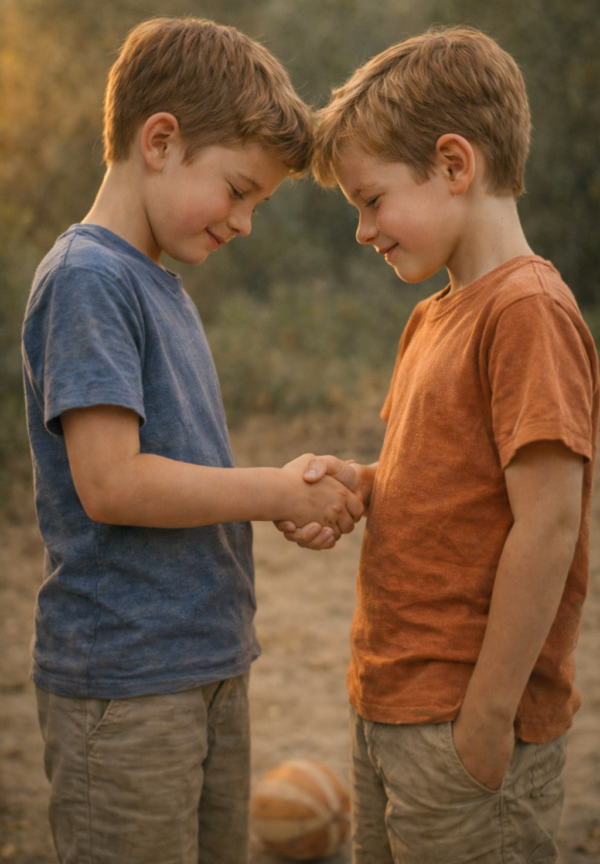
Your child comes home furious at a friend who left them out. Or they decide they hate their sibling – not the ordinary bickering kind of hate, but the cold, door-slamming, “I am done with them” kind. And you sit with them and try to talk about it, and somewhere in the conversation you find yourself saying: “You still need to be kind to them.” And they look at you like you have lost your mind. “But I do not feel like it.” And honestly? You get it. Because you have been there too – in a relationship where the feeling ran out long before the situation did. Where love became a choice you had to make without any help from your emotions.
That gap – between the feeling of love and the act of love – is one of the most important things you will ever teach your child. Because the world they are growing up in tells them love is a feeling: you have it or you do not, and when it goes, you are done. Scripture tells them something completely different. And the parent who can bridge that gap – who can show a child what love looks like when the feeling has gone quiet – is giving them something that will shape every relationship they ever have.
Here is what the research says about how children learn to love – and what actually builds the real thing in them.
Why Children Confuse Love With Feeling
Dr. Ross Campbell, child psychiatrist and author of How to Really Love Your Child, spent decades studying the emotional development of children and found something consistent: children do not naturally understand love as a choice. They experience it as a state – something that is present or absent, warm or cold, earned or withdrawn. The idea that you can love someone you are currently furious at, or choose to act lovingly toward someone who has hurt you, is a genuinely difficult cognitive and emotional leap. It is not intuitive. It has to be taught – and more importantly, it has to be seen.
Dr. Gary Chapman, whose research on love languages has shaped how millions of families understand connection, makes a similar point: children learn what love means from the environment they grow up in. A child who only ever sees love expressed as warmth and affection will struggle to recognise it in the harder forms – the patient parent who stays calm when they would rather shout, the sibling who helps when they did not want to, the friend who tells the truth when the lie would have been easier and kinder in the short term. Those are all acts of love. But they do not feel like what films and songs have taught them love is.
The gap closes when children see the real thing modelled – repeatedly, in ordinary circumstances, by people they trust. That is mostly you.
What Is Actually Happening When a Child Struggles to Love
When your child says “I do not feel like being kind to them” – they are being honest, not cruel. Dr. Daniel Siegel’s work on brain development explains why: the part of the brain that governs empathy and values-based decision making – the prefrontal cortex – is still developing well into the mid-twenties. The lower brain, which processes emotion and threat, fires fast and loud. “They hurt me, so I withdraw” is the lower brain doing exactly what it was designed to do. Choosing to act lovingly toward someone who has hurt you requires the prefrontal cortex to override that impulse – and in children, those brakes are still being built.
This means two things. First: your child is not deficient when they struggle to love someone who has hurt them. They are normal. Second: every time they make the harder choice – every time they act lovingly when the feeling is absent – the neural pathway for that choice gets slightly stronger. Love as a practised skill, chosen repeatedly in small moments, literally rewires the brain over time. You are not just shaping character. You are helping build the architecture of how they will love people for the rest of their life.
What the Bible Says About This
The most famous passage on love in all of Scripture – 1 Corinthians 13 – contains almost no reference to feelings. It is a list of choices and actions: patient, kind, not self-seeking, not easily angered, keeps no record of wrongs. Paul describes love the way a coach describes a skill – in terms of what it looks like when it is actually practised. This is not accidental. The love God calls us to is not the love that comes naturally when everything is going well. It is the love that chooses, costs, and continues.
“Love is patient, love is kind. It does not envy, it does not boast, it is not proud. It does not dishonour others, it is not self-seeking, it is not easily angered, it keeps no record of wrongs.” – 1 Corinthians 13:4-5
Read that list slowly with your child sometime and ask: which of these is hardest for you right now? Not as a test – as a conversation. Because every one of those qualities is something that can be grown. None of them are personality traits you are born with or without. They are practices. They are choices made in small moments, repeated over time, until they become who you are.
“We love because he first loved us.” – 1 John 4:19
This is the foundation everything else rests on. We do not generate love from within ourselves and offer it upward to God and outward to people. We receive it first – from a God who loved us before we deserved it, before we changed, before we were easy to love. A child who genuinely knows they are loved by God has a source to draw from. A child who does not is trying to love from empty. The deepest work of raising a child who loves well is helping them experience – personally, not just theologically – how much God loves them.
What This Looks Like at Different Ages
Ages 4 – 6: At this age, love is entirely concrete. Abstract definitions mean nothing – actions mean everything. Help them practise love as something you do: draw a picture for someone who is sad, share something you wanted to keep, help without being asked. When they do it, name it: “That was love – not just a feeling, but something you chose to do.” And when conflict comes, make 1 Corinthians 13 immediate: “Does love keep a record of wrongs? So when you keep bringing up what your brother did yesterday – is that love?” Keep it simple. Keep it specific. They are learning the vocabulary of love through small daily acts.
Ages 7 – 9: Children this age are ready to understand that love and feeling are not the same thing – and this is a revelation when it lands. The story of Grace (below) is worth reading together at this age. Ask: “Have you ever done something kind for someone when you did not feel like it? What happened afterward?” Help them notice that the feeling often follows the action, not the other way around. This is one of the most practically useful things a child can learn about relationships – and most adults never learn it.
Ages 10 – 13: Friendships get complicated here – exclusion, betrayal, the friend who said something unforgivable, the group that dropped them. This is the age where “keeps no record of wrongs” and “love someone you do not like” become real and urgent questions rather than abstract concepts. Do not lecture. Ask questions: “Is there someone right now you are finding it hard to love? What would one small act of love toward them look like – not because they deserve it, but because that is who you want to be?” The goal at this age is helping them connect love with identity, not just behaviour. This is who we are – people who love even when it is hard.
Four Things to Try at Home
1. Make 1 Corinthians 13 a living document, not a wedding reading. Read it together as a family – not formally, just in an ordinary moment – and go through it quality by quality. Ask: “Which of these is our family best at right now? Which one do we need to work on?” Turn it into a weekly conversation rather than a one-time lesson. The families who raise children who love well are the ones where love as a skill – patient, kind, not easily angered – is talked about, practised, and noticed in the small ordinary moments of daily life.
2. Catch them choosing love when they did not feel like it – and name it as identity. The next time your child does something kind for a sibling they are currently angry at, or chooses to be patient when they are frustrated, or forgives without being asked – stop and name it specifically. Not “good job” but: “I noticed you chose to be kind even when you did not feel like it. That is who you actually are.” You are not just praising a behaviour. You are handing them a self-concept. Children live up to the identity their parents give them.
3. Tell them about a time love cost you something. A real story, not a polished one. The time you chose to love someone who had hurt you and it was hard. The time you kept no record of wrongs when every instinct said keep the record. The relationship that required you to go first, before any apology came. Children who hear their parents talk honestly about the cost of love – and the choice to pay it anyway – understand something that no curriculum can teach. Love is not what you feel. It is what you choose, repeatedly, even when the feeling is gone.
4. Love someone in front of them who has not earned it. Your child is watching how you treat the difficult people in your life – the neighbour who is hard work, the family member with a long history, the person at church who has said unkind things. They are learning what love looks like when the feeling is absent and the history is complicated. You do not need to be perfect. But when you choose patience over resentment, when you do something kind for someone who has not been kind to you, when you refuse to keep the record – name it. “That was hard for me and I chose to do it anyway because that is what love does.” That lesson will last longer than anything you teach them in a formal setting.
What to Do When It Keeps Feeling Impossible
If you have tried the conversations, modelled the choices, named the good – and your child still defaults to withdrawal and score-keeping the moment a relationship gets hard – do not give up and do not catastrophise. Learning to love well is genuinely slow work. It takes years of repeated experience, not a single conversation. A few things worth checking:
Do they feel loved themselves? Dr. Campbell’s research is consistent: a child’s capacity to love others is directly connected to their experience of being loved. A child who feels chronically unseen, criticised, or conditionally loved at home will struggle to love others freely. The first question is not “how do I teach my child to love better” – it is “does my child feel genuinely loved by me?” Start there.
Is there something unresolved underneath? A child who is consistently cold, withdrawn, or cruel in relationships is often carrying something – hurt, fear, shame – that is expressing itself as the absence of love. The presenting behaviour is not usually the root issue. Ask gently: “Is there something going on that is making it hard to be kind right now?” Sometimes what looks like a love problem is actually a pain problem.
Are the expectations age-appropriate? Expecting a seven-year-old to love their sibling graciously and consistently is a longer project than it looks. Expecting a twelve-year-old to navigate a complicated friendship with maturity and generosity is genuinely hard. Celebrate the small steps. A child who chose kindness once when they did not feel like it is further along than a child who has never tried. Notice the progress, not just the gap.
The Deeper Thing
Paul ends 1 Corinthians 13 with three things that endure: faith, hope, and love – and the greatest of these is love. Not because love feels the best, but because love is the closest thing to the nature of God that a human being can embody. A child who learns to love well – who can choose patience when they are frustrated, keep no record when the record is long, go first before the apology comes – is a child who will be capable of the kinds of relationships the world desperately needs more of.
That love is not built in a single conversation. It is built in thousands of small choices, in the moments when the feeling is gone and the choice is made anyway. In the sibling who knocks on the door when they did not feel like it. In the parent who stays calm when they wanted to shout. In the child who shares what they wanted to keep. Every one of those moments – noticed, named, and celebrated – is a brick. You are not just correcting behaviour. You are building a person who knows how to love. Keep going.
One Thing to Sit With
Think about the hardest relationship in your life right now – the one where the feeling ran out a while ago and love has become entirely a choice. Are you making it? Your child is watching. The way you love the difficult people in your life is the most powerful lesson they will ever receive about what love actually is.
Further reading: How to Really Love Your Child by Ross Campbell | The Five Love Languages of Children by Gary Chapman | The Whole-Brain Child by Daniel J. Siegel and Tina Payne Bryson
Looking for more faith-filled stories? Browse the full library of Bible heroes for kids at Faith Force.