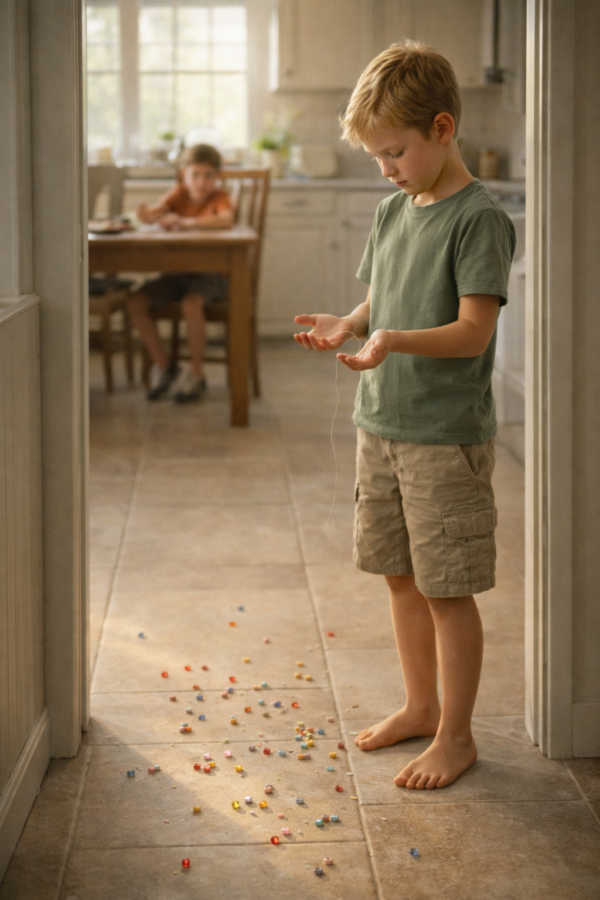
It is a Wednesday after school and your son is sitting on the bottom step, still wearing his backpack. He has not taken his shoes off. He has not asked for a snack. He is just sitting there, picking at a loose thread on his sleeve. Teaching kids about friendships is one of those things you always assumed would happen naturally – like learning to ride a bike or figuring out which foods they hate. But right now, looking at your child on that step, you know it is not natural at all. Something happened today. You can feel it before he says a word.
“Liam says I can not be in the group anymore.” He says it to the floor. Not to you. And then, quieter: “He told everyone not to talk to me.”
You sit down next to him. You do not say anything yet because your throat is tight and you are trying to keep your face steady. You want to call Liam’s mother. You want to march into that school tomorrow and make someone fix this. You want to hold him and tell him it does not matter, that Liam is not worth it, that he will find better friends. But you do not say any of that. Because you remember being eight years old and having the exact same conversation with your own parent – and you remember that none of those things helped. What helped was someone sitting next to you and letting the silence be enough, at least for a minute.
This is what it actually feels like to teach your child about friendship. Not a lesson plan. Not a list of social skills on the fridge. It is you, on the bottom step, holding space for a hurt you cannot fix – and then, slowly, helping them figure out what kind of friend they want to be in a world where not everyone will be kind back.
What Real Friendship Actually Looks Like for Kids
Adults talk about friendship in big, abstract terms. Loyalty. Trust. Being there for each other. But for a child between six and twelve, friendship is much more concrete than that. It is who saves you a seat. It is who picks you for their team. It is who laughs at your joke instead of rolling their eyes. It is who says “come on, you can play with us” when you are standing on the edge of the playground, trying to look like you do not care.
Children do not need a hundred friends. They need one or two who are real. A friend who is happy when something good happens to them – not jealous. A friend who tells them the truth, even when it is uncomfortable. A friend who sticks around when things get boring or hard, not just when things are fun. That is what genuine friendship looks like at any age. The packaging is different for kids, but the substance is the same.
The problem is that most children are never explicitly taught what a good friendship feels like from the inside. They are told to “be nice” and “share” and “use kind words.” But nobody sits them down and says: “A real friend makes you feel more like yourself, not less. A real friend does not make you earn their attention every day. A real friend can disagree with you and still like you.” These are things children can understand. They just need someone to say them out loud.
And here is the part that trips up a lot of parents: your child also needs to know what friendship is not. A friend who only wants to play when no one better is around is not a real friend. A friend who makes fun of you in front of other kids but is nice when you are alone is not a real friend. A friend who says “if you do not do what I say, I will not be your friend anymore” is not a real friend. Children get stuck in these patterns because they are afraid of having no friends at all. They will tolerate being treated badly because the alternative – being alone – feels worse. Your job is to help them see that being alone for a while is better than being with someone who makes them feel small.
How to Model It Before You Teach It
Children learn more about friendship from watching you than from anything you say about it. They are paying attention to how you talk about your friends when they are not in the room. They notice whether you show up when someone is having a hard time or whether you just send a text. They hear the way you handle disagreements with the people you care about – whether you go quiet and resentful, or whether you say what needs to be said and stay connected anyway.
If you want your child to be the kind of friend who shows up, they need to see you showing up. That might mean making the meal for the neighbour who just had surgery even though your week is already full. It might mean calling your friend back even when you are tired and would rather scroll your phone. It might mean saying sorry to someone when you were wrong – out loud, where your child can hear it – and not making excuses about why you said what you said.
One of the most powerful things you can do is let your child see you navigate a friendship struggle. Not every detail. But enough to show them that friendships between adults are not always smooth either. “I had a misunderstanding with Sarah this week. I felt hurt, so I told her. We talked about it and it is okay now.” That is a masterclass in three sentences. You named the feeling. You communicated it. You repaired the relationship. Your child just learned more about conflict resolution than a year of “use your words” ever taught them.
And model the hard parts too. Let them see that sometimes friendships change and that is okay. Sometimes people grow apart. Sometimes a friendship runs its course and it does not mean anyone failed. Children need to know that losing a friend is not always a catastrophe. Sometimes it is just life making room for the next person who belongs in your story.
The Friendship Skills That Actually Matter
There are specific skills that set good friends apart from everyone else. These are not personality traits that some kids are born with and others are not. They are learnable. Practicable. And the window between ages six and twelve is wide open for building them.
Listening – really listening. Most children wait to talk. They are not listening to understand – they are listening to find their opening. Teach your child what it looks like to actually hear someone. Eye contact. Nodding. Asking a follow-up question instead of immediately talking about themselves. “You went to the beach? What was the best part?” That tiny skill – the follow-up question – changes everything. It tells the other person: I care about your story, not just mine. You can practise this at the dinner table every single night.
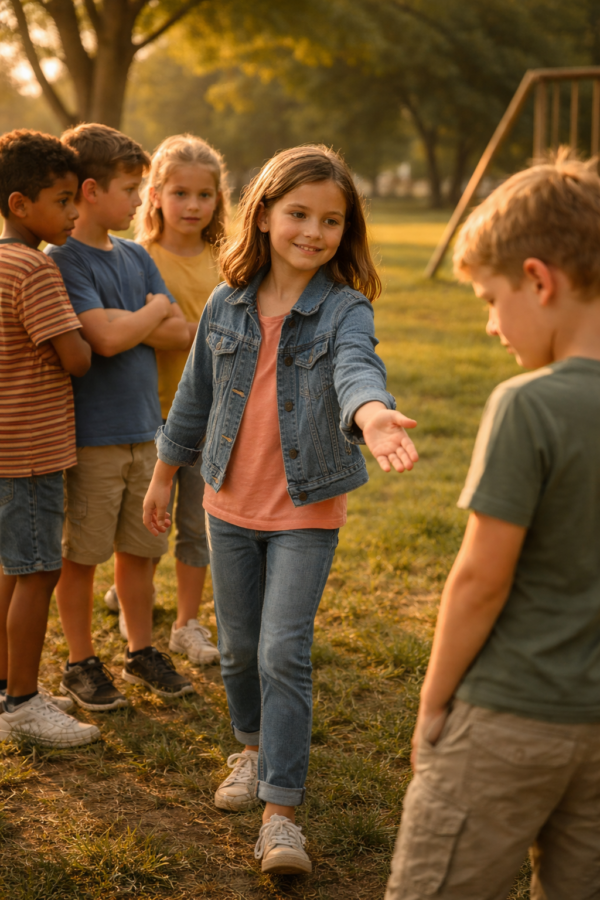
Including others. The default in most playgrounds is small, closed groups. The brave thing – and it is brave – is to open the circle. “Do you want to play with us?” is one of the most powerful sentences a child can say. It costs them something. They risk their own social standing by inviting the kid nobody else is talking to. That takes kindness and courage working together, and it is worth celebrating every single time you see it happen.
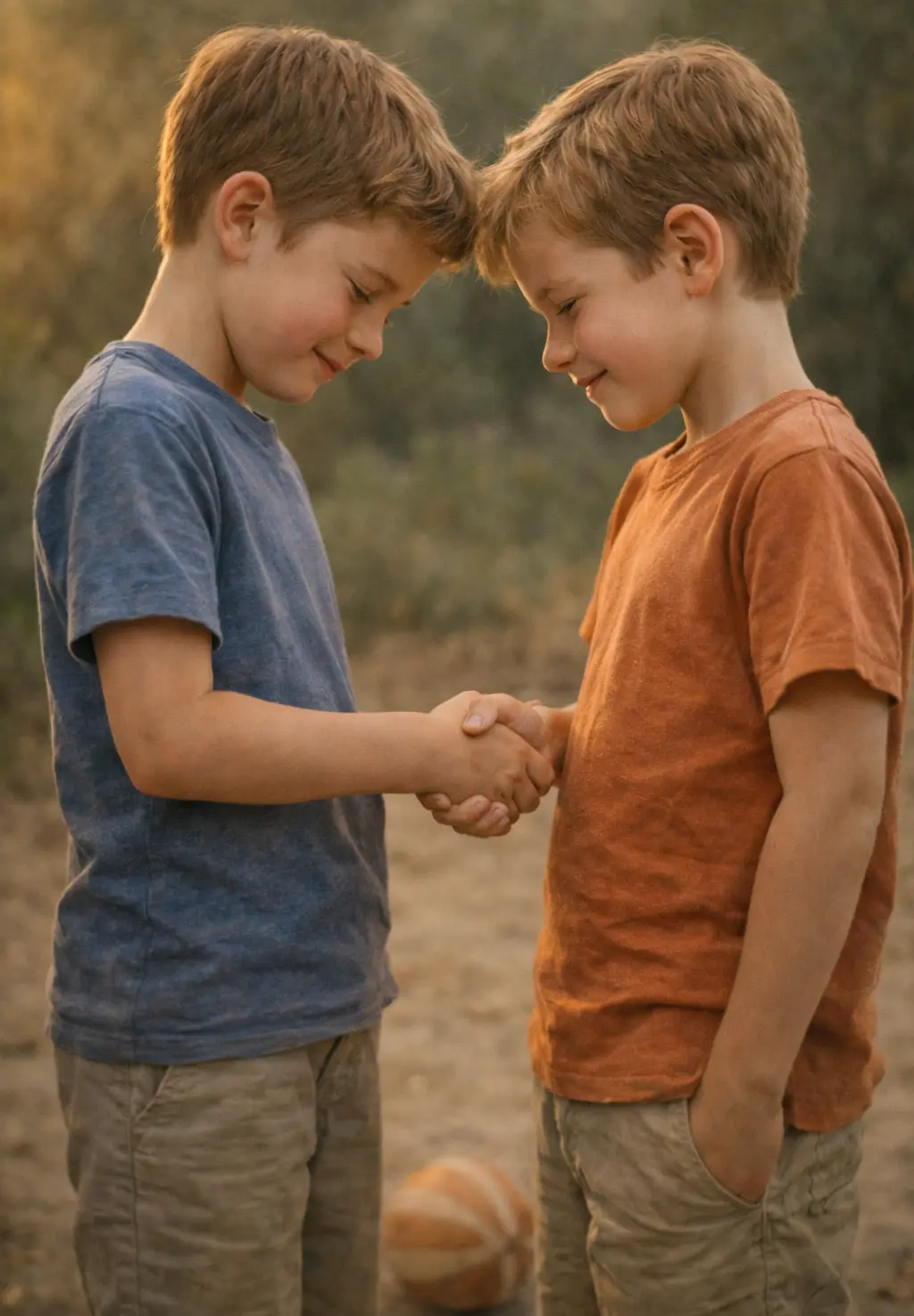
Handling disagreements without ending the friendship. This is the one most kids struggle with. At six or seven, a disagreement often means the friendship is over – at least for the afternoon. By nine or ten, children can start learning that two people can disagree and still care about each other. Help them practise the language: “I did not like that, but I still want to be your friend.” “I think we see this differently. That is okay.” These phrases feel awkward at first. But they are the building blocks of every healthy relationship your child will ever have.
Apologising and meaning it. Not the forced “say sorry” that every parent has pushed through gritted teeth. A real apology names what happened, takes responsibility, and says what they will do differently. “I am sorry I said that about you. That was mean. I will not do it again.” That is a skill. It takes humility – which is uncomfortable for kids who are still building their sense of self. But a child who learns to apologise well becomes an adult that people trust.
Being happy for someone else. This one is underrated. When your child’s friend gets the lead in the school play and your child got a background role, what happens? Can they say “that is awesome, you are going to be great” and mean it? Or does it eat at them? The ability to celebrate someone else’s win without making it about your own loss is one of the rarest and most beautiful friendship skills there is. It has a name in grown-up language: it is called generosity of spirit. And it starts with small moments at age seven.
When Friendships Hurt
Every child will face friendship pain. It is not a matter of if. It is a matter of when and how bad. The question is not how to protect them from it – you cannot – but how to walk them through it without minimising the hurt or making it worse.
Exclusion. Being left out is one of the deepest social wounds a child can experience. And it often does not come with a clear villain. It is not always bullying. Sometimes the group just moved on without them. Sometimes the friendship shifted and nobody announced it. Your child comes home and cannot explain exactly what happened – they just know they are on the outside now. Resist the urge to say “they are not real friends anyway.” That dismisses the pain. Instead try: “That sounds really lonely. Tell me more about what happened.” Let them talk. Let them feel it. Then, when they are ready, help them think about what they want to do next. Not what you want them to do. What they want to do.
Mean behaviour from a friend. This is different from exclusion. This is the friend who says something cruel, spreads a rumour, or turns others against them. The betrayal cuts deeper because it comes from someone they trusted. Help your child separate the behaviour from the person. “What Mia did was unkind. That does not mean she is a bad person. But it does mean you get to decide whether this friendship is still safe for you.” Give them permission to set a boundary. Children often do not know they are allowed to step back from a friendship that hurts them. They think they have to stay because they have always been friends, or because everyone else is still friends with that person. Tell them clearly: you are allowed to take a step back. You are allowed to protect your heart.
Losing a friend. Sometimes a friendship just ends. A family moves away. Interests change. Someone finds a new group. The grief is real – even if adults do not always recognise it as grief. Your child is mourning a relationship, and it deserves to be treated with the same tenderness as any other loss. “I know you miss her. It is okay to be sad about that.” Do not rush them into replacement. Do not immediately start arranging new playdates to fill the gap. Let the loss be what it is. They will be ready for new connections when they are ready – not before.
The Courage It Takes to Be Kind
We talk a lot about kindness. But we do not talk enough about how much courage it takes to actually be kind when it counts. Kindness in easy moments is easy. Being kind to your best friend on a good day does not cost you anything. But being kind when it is risky – that is where character is built.
It takes courage to sit next to the kid who is eating lunch alone when your other friends are watching and might think it is weird. It takes courage to say “that is not funny” when someone makes fun of another child and everyone else is laughing. It takes courage to include someone new when your friend group already feels complete and comfortable. It takes courage to forgive someone who hurt you and try again.
This is the part of friendship that nobody puts on a poster. Being a good friend is not just about being nice. It is about being brave enough to be kind when kindness is not the popular choice. Your child needs both virtues working together – kindness to care, and courage to act on that caring even when it costs them something.
The Bible has a story about exactly this kind of friendship. Ruth – a young woman who lost everything and chose to stay with her mother-in-law Naomi instead of going back to the life she knew. She did not have to stay. Nobody expected her to. The safe and sensible thing would have been to go home. But she looked at someone who needed her and said, in one of the most well-known passages of Scripture, something like: “Where you go, I will go. Your people will be my people.” One way to read that is as a love story between family members. But another way to read it is as the purest example of what friendship looks like when it costs you something. Ruth chose loyalty over comfort. She chose kindness when kindness was hard. And the story does not end in tragedy – it ends in abundance. That is the pattern worth showing your children. Courage and kindness together do not weaken you. They build something that lasts.
There is a line in Proverbs that says a friend loves at all times – not just when it is convenient or safe or easy. “At all times” includes the awkward times, the risky times, the times when standing by someone might cost you your spot at the popular table. That is the kind of friendship worth aiming for. And it is the kind of friendship your child will only learn if someone shows them what it looks like and tells them they are brave enough to do it.
Ecclesiastes puts it differently but lands in the same place. Two are better than one, the passage says, because if one falls down, the other can help them up. But pity the one who falls and has no one to help them up. That is not just advice – it is a picture of what friendship is for. Not entertainment. Not status. Help. Presence. Someone who reaches down when you are on the ground. Teach your child to be the one who reaches down. That is the whole thing.
What You Can Do at Different Ages
Friendship looks different at six than it does at twelve. What your child needs from you shifts as they grow. Here is what to focus on at each stage.
Ages 6-8: Building the Basics
At this age, friendship is mostly about proximity and shared activity. Your child’s best friend is whoever is sitting next to them or playing the same game. Best friends can change three times in one week. That is normal. Do not read too much into it.
Focus on the fundamentals: taking turns, sharing, using kind words, and knowing when to walk away from a situation that does not feel right. These are not obvious to a six-year-old. They are skills that need to be named, practised, and reinforced. Keep playdates short – one to two hours with one friend – and set them up for success with a clear activity. Long, unstructured playdates at this age tend to fall apart.
Most importantly, help them name their feelings. “It sounds like you felt left out when they did not let you play.” Children at this age often know something is wrong but cannot identify what it is. When you give them the words, you give them the tools to eventually handle it themselves.
Ages 9-10: Deepening and Testing
This is when friendships start to deepen – and when they start to hurt more. Children form genuine bonds based on personality and shared interests, not just whoever is nearby. They also become more aware of social hierarchies. Groups form. Cliques appear. The question “who is in and who is out” starts to matter more than it should.
Focus on empathy. Ask questions that build perspective-taking: “How do you think she felt when that happened? What do you think was going on for him that day?” These are not rhetorical questions. Wait for the answer. Let your child sit with the discomfort of seeing someone else’s point of view – especially when they were part of the problem.
Watch for controlling friendships at this age. It is common for one child to become the “gatekeeper” who decides who is in and who is out. If your child is the one being controlled, help them see that a friendship should never make them feel trapped. If your child is the one doing the controlling – and this is harder to hear – gently help them understand that real leadership is not about power. It is about making sure everyone is included.
Ages 11-12: Navigating Complexity
Friendships at this age are intense, layered, and sometimes exhausting – for the child and for you. Gossip becomes a weapon. Loyalty is tested constantly. Digital communication adds a whole new layer of complexity, with group chats, messages that can be screenshotted, and conflicts that play out where no adult can see them.
Focus on integrity. Help your child think about who they are in a group versus who they are one-on-one. “Do you act the same way around your friends when it is just you two as you do when the whole group is together?” Most kids will admit that they do not. That is the opening for a real conversation about peer pressure, staying true to yourself, and having the courage to be the same person in every room.
Talk about digital friendships with the same seriousness as in-person ones. “Would you say that to her face?” is a question that should be in every child’s head before they hit send. And “How do you feel after spending an hour in that group chat?” is a question that helps them assess whether their digital friendships are building them up or wearing them down.
Your Role Is Bigger Than You Think
You cannot pick your child’s friends for them. You cannot protect them from every hurt. You cannot guarantee that they will never be the one sitting alone at the lunch table. But you can do something that matters more than any of that: you can make sure they know what a good friendship looks like, what a good friend does, and that they are worth being treated well.
You can build a home where feelings are named, not dismissed. Where apologies are modelled, not just demanded. Where your child sees you show up for people – consistently, imperfectly, and with your whole heart. Where kindness is not just a word on a poster but a practice that costs something and is chosen anyway.
Your child is watching you. They are learning from what you do far more than from what you say. So be the kind of friend you want them to become. That is the real curriculum. That is where the teaching happens.
And on the hard days – the days when they come home with that look on their face, the days when the backpack hits the floor and the silence says everything – remember this: the fact that they come to you at all means you have already built something. They trust you with their pain. That is not small. That is the foundation everything else is built on.
Faith Force has resources that can help you keep this conversation going at home. The story of Ruth is one of the best starting points for talking about loyalty, kindness, and what it means to be a friend who stays. The kindness and empathy page has age-appropriate materials for building these virtues. And if your child responds to hands-on challenges, the hero missions give them real things to do – small acts of courage and kindness that build the character muscles friendship requires. You will find printable resources on the free downloads page too.
Try This Tonight
You do not need a plan or a workbook. Just pick one of these and try it tonight.
1. The dinner table question. Ask your child: “Who did you sit with at lunch today? Did you notice anyone sitting alone?” Do not lecture. Just listen. If they did notice someone alone, ask: “What do you think you could do about that tomorrow?” Let them come up with the answer. You are not telling them to be kind. You are helping them discover that they already want to be.
2. Name what you saw. If you noticed your child do something kind for a friend – sharing something, including someone, saying sorry – name it specifically. Not “good job” but “I noticed you asked Emma to join your game today even though your other friends were not sure about it. That took courage. I am proud of you for that.” Specific praise builds specific behaviour. They will do it again because they know you saw it and it mattered.
3. Tell them about your friend. Share a short, real story about one of your own friendships. A time a friend showed up for you. A time you had a fight and worked through it. A time you lost a friend and how it felt. Keep it honest and age-appropriate. Your child needs to know that friendship is not something you figure out by age twelve and then never struggle with again. It is a lifelong practice. And you are still learning too.