Kindness and Empathy: Raising a Child Who Notices and Acts
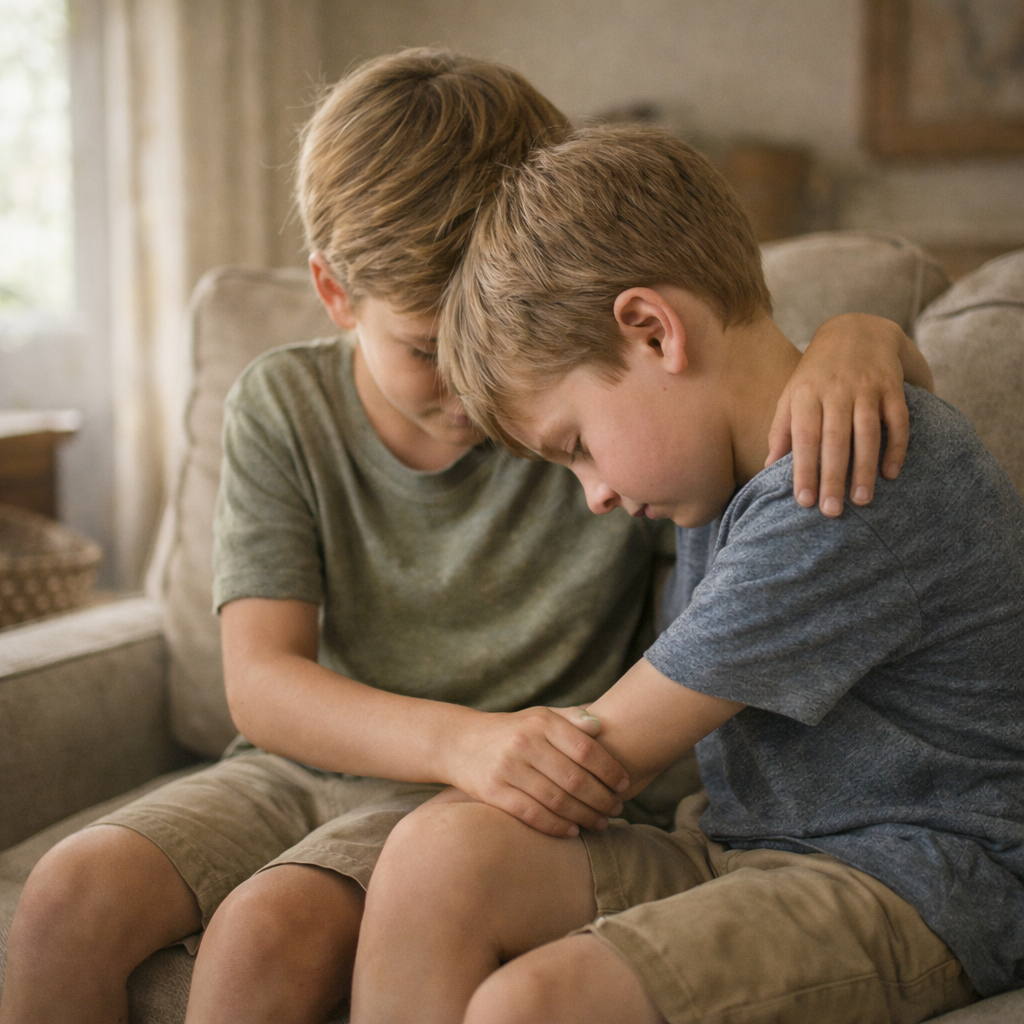
Your child watches a classmate sit alone at lunch – and keeps walking. Not cruelly. Just… keeps walking, because their own friends are already at the table and the moment passed and it was slightly awkward and honestly it was not their problem. Or they see something unkind happen in the group chat and say nothing, because saying something would have been a whole thing. Or a sibling is clearly upset and they walk past the closed door without knocking, because they are busy and it is not the right time and someone else will probably do it.
None of those moments are dramatic. None of them involve a bully or a crisis. They are just the ordinary, daily choice between noticing someone and doing something about it – or noticing and moving on. And most children, most of the time, move on. Not because they are unkind. Because empathy – the actual stopping, seeing, feeling-with – is a skill. And like every skill, it has to be taught. It has to be practised. And it starts long before the moment arrives.
Here is what the research says about how empathy actually develops in children – and what makes the difference between a child who notices and one who acts on what they see.
Why Empathy Does Not Just Happen
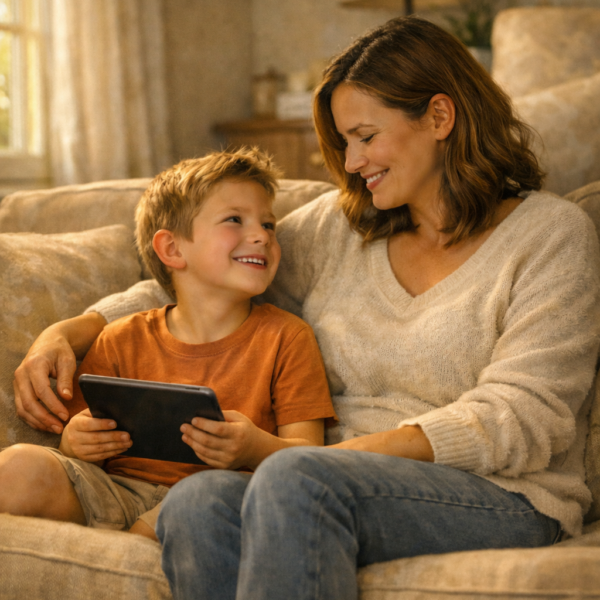
Dr. Michele Borba, educational psychologist and author of UnSelfie: Why Empathetic Kids Succeed in Our All-About-Me World, spent years researching empathy in children and found something that should alarm most parents: empathy scores in children have dropped significantly over the past three decades – by as much as 40% in some studies – while narcissism scores have risen. The cause is not that children are worse people. It is that the conditions that grow empathy – face-to-face connection, unstructured time, exposure to people outside their immediate circle, being asked to consider someone else’s experience – have been steadily replaced by screen time, curated social environments, and a cultural emphasis on personal achievement and happiness above everything else.
The good news from Borba’s research: empathy is not a fixed trait. It is a skill that can be taught, practised, and grown. Children who are regularly asked “how do you think they felt?” develop the habit of perspective-taking. Children who are given opportunities to be kind – real opportunities, not just instructions – build the emotional vocabulary and the courage to act on what they notice. The family is still the most powerful place in the world for this to happen. But it does not happen automatically. It has to be intentional.
Dr. Daniel Siegel’s work on interpersonal neurobiology adds the brain science: humans have mirror neurons – cells that fire when we observe someone else’s experience, almost as if we were having it ourselves. We are literally wired for empathy. But that wiring requires activation – it grows stronger with use and weaker with neglect. A child who is never asked to consider what someone else is feeling, who is never in situations that require genuine perspective-taking, has mirror neurons that are simply not being exercised. The capacity is there. The practice is what builds it.
What Is Actually Happening When a Child Keeps Walking
When your child sees someone who needs kindness and does not act – it is rarely hardness of heart. It is usually one of three things. First: they did not actually slow down enough to register what they saw. Empathy requires a moment of genuine attention, and most children (like most adults) are moving fast enough that the signal does not fully land. Second: they felt the discomfort of the situation and moved away from it rather than toward it – which is a completely normal instinct, because approaching someone in pain is harder than avoiding them. Third: they did not know what to do. They noticed, they felt something, but the gap between feeling and acting was too wide to bridge in the moment.
All three of those gaps are closeable – with practice. Slowing down is a habit that can be built. Moving toward discomfort rather than away from it is a skill that develops with repetition. And the practical “what do I actually do?” is something that can be talked about, role-played, and modelled long before the moment arrives. The child who kept walking is not the problem. The child who never gets the practice, the conversation, or the model is the one who keeps walking forever.
What the Bible Says About This
The most striking thing about Jesus in the Gospels is not what He said. It is that He stopped. He stopped for blind Bartimaeus when the crowd told the man to be quiet. He stopped for the woman who touched the hem of His garment in a pressing crowd. He stopped for the widow at Nain, for the leper no one else would touch, for the children the disciples tried to send away. In a world that moved fast and rewarded efficiency, He kept stopping for individuals that everyone else was walking past.
“Be kind and compassionate to one another, forgiving each other, just as in Christ God forgave you.” – Ephesians 4:32
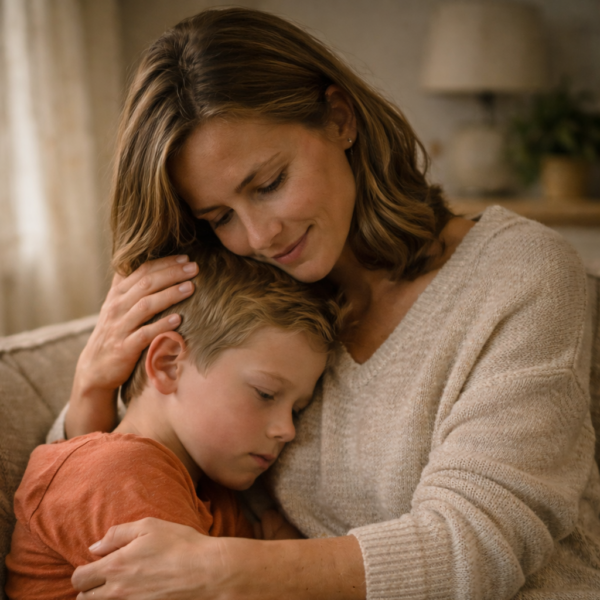
Compassion and kindness are paired here deliberately – the inner and the outer, the feeling and the action. Compassion without kindness stays private. Kindness without compassion becomes performance. Together they form something real: a person who genuinely enters someone else’s experience and then does something about it. That is the model. That is the call. And it starts small – with the child who pauses before walking past the closed door and knocks.
“Rejoice with those who rejoice; mourn with those who mourn.” – Romans 12:15
This is harder than it looks. Mourning with someone who mourns requires setting aside your own comfort and sitting in someone else’s pain without trying to fix it or hurry them out of it. Rejoicing with someone who rejoices requires setting aside any envy or indifference and genuinely entering their joy. Both ask you to leave your own experience and enter theirs. That is the full loop of empathy – and it is one of the most countercultural things a family can practise together.
What This Looks Like at Different Ages
Ages 4 – 6: At this age the most powerful thing you can do is ask the question – constantly, naturally, in ordinary moments: “How do you think he felt when that happened?” “What do you think she needed?” “What would have helped you if you were in that situation?” You are not expecting deep answers. You are building the habit of asking. Children who are regularly invited to consider someone else’s experience develop the perspective-taking reflex early – and it becomes instinctive rather than effortful. Also: name empathy when you see it. “You noticed she was sad and you went to her. That is kindness – you saw her and you did something about it.”
Ages 7 – 9: This is the age to introduce the Good Samaritan (Luke 10:25-37) and sit on the moment that matters most – not the helping, but the seeing. “When he saw him, he had compassion.” Ask: “What did the priest and the Levite do when they saw him? Why do you think they kept walking? What made the Samaritan different – was it what he saw, or what he did with what he saw?” Help your child identify someone in their world right now who might be sitting alone, struggling quietly, or going through something hard. Ask: “What is one thing you could do this week that they did not have to ask for?”
Ages 10 – 13: Social hierarchies get rigid here – and empathy across those lines becomes genuinely costly. The child who is kind to the unpopular kid risks social capital. The one who speaks up in the group chat risks the group. This is the age to name that cost directly: “Being kind to someone the group has decided not to like takes courage. It is not just a virtue – it is brave.” Read Hebrews 4:15 together: Jesus can sympathise with our weaknesses because He has been through what we go through. Ask: “Is there someone in your world right now who needs someone to understand what they are going through – and who has no one doing that?” Then: “What would one step toward them look like?”
Four Things to Try at Home
1. Ask “how do you think they felt?” every single day. Not as a correction – as a conversation. At dinner, in the car, after school: “Tell me about your day. Was there a moment when someone seemed upset or left out? How do you think they felt?” Borba’s research is clear: children who are regularly asked this question develop the perspective-taking habit automatically. The question does not need a perfect answer. It just needs to be asked – consistently, naturally, as a normal part of how your family processes the day. You are building the instinct that pauses before walking past.
2. Teach the move toward, not just the feeling. Empathy without action stays inside. The gap most children face is not that they do not feel something – it is that they do not know what to do with what they feel. Give them practical, concrete moves: knock on the door. Ask the real question – not “are you okay?” (everyone says yes) but “you seem like things have been hard – do you want to talk?” Sit with someone at lunch. Send the message. Stay when everyone else leaves. These are learnable moves. Practise them at home first – with siblings, with you – so they are available when the moment comes at school.
3. Model empathy out loud in your own life. Children learn the language and the practice of empathy by watching the adults around them. When you interact with someone who is struggling – a friend, a family member, a stranger – narrate what you are doing: “I noticed she seemed quiet today so I asked if she was okay.” “He is going through something hard, so I dropped off dinner without making a big deal of it.” “I stayed on the call a bit longer because she needed someone to talk to.” You are not performing virtue. You are making visible a process that is usually invisible – so your child can see what noticing and acting actually looks like in a real adult life.
4. Celebrate the unseen acts of kindness. Borba’s research found that children internalise kindness as part of their identity fastest when it is noticed and named – not rewarded with prizes, but specifically named: “I heard you stayed with her at lunch even though your other friends were somewhere else. You chose to stay. That is who you are.” The child who is told they are the kind of person who notices and acts is more likely to keep being that person. Identity is the most durable motivator there is. Name the kindness you see – especially the small, private, unseen kind that no one else noticed.
What to Do When the Empathy Seems Absent
If you have asked the question, modelled the moves, named the good – and your child still seems to move through the world without registering the people around them – do not catastrophise. Empathy development varies significantly by temperament, age, and experience. A few things worth checking:
Is screen time crowding out face-to-face connection? Borba’s research links the decline in empathy scores directly to the rise of screen-mediated interaction. Empathy grows through face-to-face contact – reading facial expressions, hearing tone of voice, being in the physical presence of someone who is hurting. A child whose primary social world is mediated through a screen is practising a fundamentally different set of social skills. This is not an argument for eliminating screens – it is an argument for making sure real-world, face-to-face connection is still happening in meaningful quantity.
Is your child carrying their own unprocessed pain? Children who are struggling themselves – anxious, bullied, overwhelmed – often have very little bandwidth for other people’s feelings. It is not selfishness. It is capacity. A child who is drowning cannot save someone else. Before asking more empathy from a child who seems closed off, ask how they are actually doing. Sometimes the work is not building empathy – it is creating enough safety and space that empathy has somewhere to grow from.
Are the opportunities real and age-appropriate? Abstract discussions about kindness produce very little change. Real, specific, low-stakes opportunities produce a great deal. Volunteering as a family. Visiting a grandparent who is lonely. Writing a card to someone who is sick. Helping a younger child with something they find hard. The empathy muscle grows through use – and the opportunities need to be real enough that something is genuinely at stake, even if it is small.
The Deeper Thing
The goal is not a child who is endlessly pleasant or who never has hard feelings of their own. It is a child who has developed the habit of pausing long enough to notice the people around them – and the courage to do something about what they see. That child will be a different kind of friend, a different kind of colleague, a different kind of parent one day. Not because they are nicer than other people, but because they have practised, thousands of times, the thing that most people only feel: the move toward.
It is built in small moments. The question asked at dinner. The door knocked on. The seat taken next to the person sitting alone. The message sent to the one who seems quiet. Every one of those moments – seen, named, celebrated – builds the identity: I am someone who notices. I am someone who acts on what I see. That identity, carried into adulthood, changes every room it walks into. Keep building it. The world is changed one stopped moment at a time.
One Thing to Sit With
Think about the last week. Was there a moment when you noticed someone who needed kindness – and kept walking? Not because you are unkind. Because it was slightly awkward, or the moment passed, or you were not sure it was your place. What would it have looked like to stop? Your child is watching not just whether you ask them to be kind, but whether you practise it yourself – in the small, unsexy, slightly-awkward moments where no one would have blamed you for keeping walking.
Further reading: UnSelfie by Michele Borba | The Whole-Brain Child by Daniel J. Siegel and Tina Payne Bryson | Raising Empathetic Children by John F. and Linda Friel
Looking for more faith-filled stories? Browse the full library of Bible heroes for kids at Faith Force.