How to Raise a Compassionate Child Who Feels What Others Feel
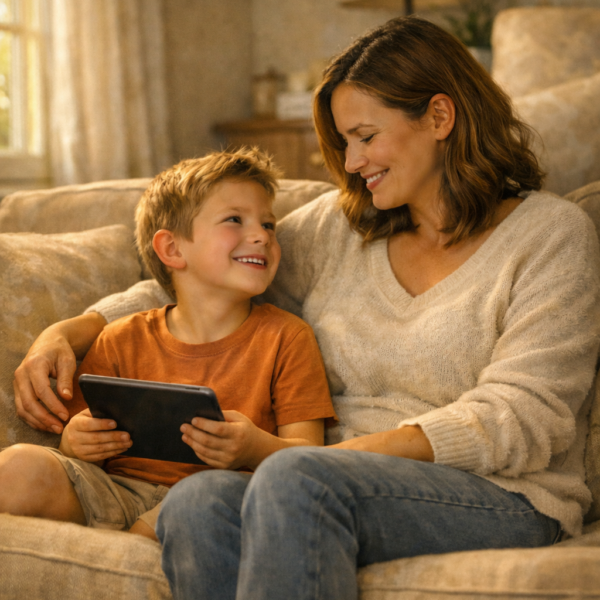
You were watching. That is the thing you cannot stop thinking about. You were watching when another child dropped their snack across the room, and yours glanced over, looked away, and went back to their game. No cruelty in it – just nothing. A complete absence of the thing you have been trying to build in them since they were small enough to hold. You did not say anything in the moment. You were not sure what to say. But later, driving home, you replayed it. Was that normal? Is this who they are becoming? Have you somehow failed to plant the one thing you most wanted them to carry?
That moment – the walk-past, the glance-and-look-away – is not the same as cruelty, and it is important to name that. Your child was not being unkind. They were being typical. But typical is not the same as good, and you know the difference. Compassion is not a passive quality. It is not just the absence of meanness. It is a movement – toward, not past. And watching your child choose past, even once, can feel like a quiet alarm you do not know how to answer.
Research in developmental psychology is increasingly clear that compassion is not a trait children either have or do not have. It is a capacity that develops over time, shaped by biology, environment, and deliberate practice. Dr. Jamil Zaki, Director of the Stanford Social Neuroscience Laboratory and author of The War for Kindness, describes compassion as a skill – something that can be built through the right conditions and weakened through the wrong ones. Understanding what those conditions are is where the work begins.
Why Children Walk Past Instead of Stopping
The walk-past is not usually a moral failure. It is most often a developmental one. Young children, and many older ones, default to what psychologists call the personal distress response – they register that something uncomfortable is happening nearby, feel a flicker of their own discomfort, and move away from it. This is the opposite of compassion. Compassion requires the child to stay with that discomfort long enough to orient toward the other person rather than away from the feeling.
Dr. Mary Gordon, founder of the Roots of Empathy programme used in schools across multiple countries, identifies the bottleneck clearly: most children have not been taught to slow down inside a moment of someone else’s distress. They have the raw emotional sensitivity – most children do – but they lack the habit of pausing, noticing, and choosing a response. Speed is the enemy of compassion. A child moving fast through their day has almost no chance of stopping for someone else’s pain. The skill of stopping has to be practised before the moment arrives.
What Is Actually Happening When a Child Lacks Compassion
There is a difference between a child who cannot feel empathy and a child who has not yet learned to act on it. Dr. Daniel Siegel, clinical professor of psychiatry at UCLA and author of The Whole-Brain Child, draws an important distinction between emotional contagion (catching someone’s feeling automatically), empathy (understanding their experience), and compassion (choosing to respond to it). A child can be capable of all three and still consistently stop at the first or second stage, never arriving at the third.
What blocks the third stage is usually one of three things: a child who is overstimulated and has no attentional resources left to give; a child who has learned, implicitly, that other people’s distress is not their responsibility; or a child who genuinely does not know what to do when they get close to someone’s pain. The last one is more common than parents realise. Many children walk past not because they do not care but because they have never been given a script for what staying looks like. Compassion without competence tends to retreat.
What the Bible Says About This
The word that sits at the centre of compassion in the Hebrew Scriptures is racham – often translated as mercy or compassion, but rooted in the word for womb. It carries the image of visceral closeness, of being moved at the deepest level by another person’s condition. This is not a feeling that observes from a distance. It is a feeling that draws near. When the Psalms describe God’s compassion, it is never abstract. It is always followed by action.
“Be kind and compassionate to one another, forgiving each other, just as in Christ God forgave you.” – Ephesians 4:32
This verse places compassion inside a community practice, not an isolated feeling. It is something done toward one another – directional, relational, chosen. The word translated “compassionate” here is the Greek eusplanchnos, meaning tender-hearted, literally well-boweled – a similarly visceral image to the Hebrew. The Bible’s consistent picture of compassion is one of physical proximity and deliberate movement. It costs something. That is the point.
“Finally, all of you, be like-minded, be sympathetic, love one another, be compassionate and humble.” – 1 Peter 3:8
Peter lists compassion inside a cluster of qualities that are all, in some sense, about how you hold yourself in relation to another person. To be compassionate here is to be positioned well – humble enough to get close, sympathetic enough to feel something, loving enough to stay. For children, this is not natural in the same way breathing is natural. It is natural in the way language is natural – present as potential, but requiring formation to become fluency.
What This Looks Like at Different Ages
Ages 4 – 6: At this stage, compassion is mostly about noticing and naming. A four-year-old cannot yet be expected to override their own distress response and stay with another child’s tears. What they can learn is to pause and look – to point their attention at someone else’s face. Games that ask “how do you think that person feels?” using pictures, stories, or puppets are not extras. They are the foundational work. Dr. Ross Thompson, professor of psychology at UC Davis, notes that children this age are building the emotional vocabulary that later becomes the scaffold for compassionate action. Without the words, the feelings have nowhere to go.
Ages 7 – 9: Children in this window are capable of perspective-taking with some reliability, which means they can understand, not just feel, that another person is in distress. The gap that tends to open here is between understanding and acting. A seven-year-old may see that a classmate is left out and do nothing – not from indifference but from a kind of paralysis. They do not know how to enter the situation without drawing attention to themselves or making things worse. Role-playing specific responses at home is valuable at this age. What do you actually say when you sit down next to someone who is upset? Practise the words until they feel less foreign.
Ages 10 – 13: The social pressures of this stage can actively work against compassion. Peer perception matters enormously, and stopping for someone who is struggling can feel like a social risk. Dr. Michele Borba, educational psychologist and author of UnSelfie: Why Empathetic Kids Succeed in Our All-About-Me World, identifies this as the age when explicit conversations about moral courage become necessary. It is not enough to feel compassion privately. The question becomes whether a child can act on it publicly, in front of peers. That is a different and harder skill, and it requires parents to name and affirm it specifically when they see it happen.
Four Things to Try at Home
1. Slow the debrief after social situations. When your child comes home from school or a gathering, resist asking “did you have fun?” and try instead: “Did anything hard happen for anyone today?” This reorients their attention toward the people around them rather than their own experience. It does not need to be a long conversation. Even two minutes of this regularly builds the habit of scanning for others.
2. Give them the words in advance. Children often fail to act compassionately because they genuinely do not know what to say. Before playdates or school days, give them one or two phrases they can actually use – “Are you okay?”, “Do you want to sit with me?” – and let them know it is always appropriate to use them. Having a script removes the activation energy that prevents action.
3. Let them see your compassion in action. This is more powerful than almost anything else. When you stop to help someone, name it out loud afterward – not to congratulate yourself, but to make the invisible visible. “I stopped because she looked like she needed help and I wanted her to know someone noticed.” Children absorb what they see long before they absorb what they are told.
4. Create low-stakes compassion opportunities regularly. Volunteering once a year is meaningful but not formative on its own. The research points to repeated, ordinary practice – helping a neighbour, writing a note to someone who is ill, taking time to ask how an elderly relative is actually doing. Dr. Borba’s work consistently shows that compassion grows through accumulated small acts, not occasional large ones. Build it into the weekly rhythm of your home.
What to Do When It Keeps Not Happening
If compassion remains consistently absent despite your efforts, it is worth pausing before trying a new strategy and asking a different set of questions first.
Is your child overwhelmed? Children who are dealing with anxiety, academic pressure, or social stress have significantly reduced capacity for other-oriented attention. You cannot pour from an empty vessel. A child who is emotionally depleted will consistently default to self-protection. Address the depletion before expecting the generosity.
Is compassion being modelled consistently in the home? Not in the dramatic moments – those are easy. In the ordinary ones. How do you speak about the difficult neighbour? What do you do when you hear about someone’s suffering at work? Children are extraordinary anthropologists. They notice the gap between what you teach and what you live, and they tend to replicate the latter.
Is there a screen or stimulation pattern that may be dulling sensitivity? Dr. Zaki’s research notes that exposure to high volumes of distressing or dehumanising content – including certain gaming and social media environments – is associated with what he calls empathy fatigue, a dulling of the response over time. This is not a moral indictment of screens. It is a physiological observation. If your child is spending large amounts of time in environments that normalise indifference or reward aggression, their compassion circuits are getting a daily workout in the wrong direction.
The Deeper Thing
Compassion, in the end, is a theology of proximity. It is the conviction that another person’s suffering is close enough to matter – that the distance between you and them is not the relevant thing. Jesus does not observe from across the room. He moves toward. He stops. He touches the untouchable. He asks the obvious question – “What do you want me to do for you?” – not because he does not know the answer, but because being seen requires being asked. That is the model your child is being formed toward. Not just a feeling. A posture. A way of moving through the world that defaults toward others rather than away from them.
This is not built in a day. It is not built in a conversation. It is built in the ordinary accumulation of small practices repeated over years – the pause, the question, the willingness to get close enough to feel something. You are not trying to produce a compassionate adult through a single intervention. You are building the conditions in which compassion becomes the natural response. That is the work, and it is worth it.
One Thing to Sit With
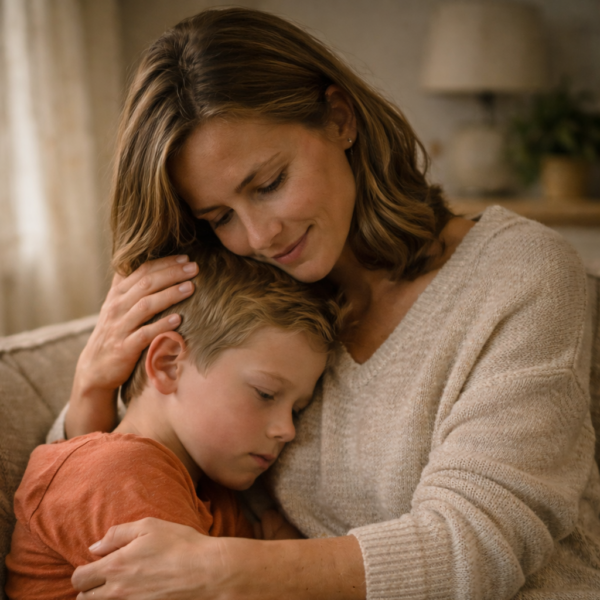
The parent who watches their child walk past and feels that quiet alarm – that parent is paying attention. That is not a small thing. But it is worth asking, honestly, when you last stopped. Not in a crisis moment, not when it was easy, but in an ordinary Tuesday moment when someone near you needed something and you had somewhere else to be. The research is clear that children learn compassion primarily through observation. If yours is still learning to stop, the most useful question is not what you should teach them. It is what they have been watching you do.
Further reading: The War for Kindness by Jamil Zaki | UnSelfie: Why Empathetic Kids Succeed in Our All-About-Me World by Michele Borba | Roots of Empathy by Mary Gordon
Looking for more faith-filled stories? Browse the full library of Bible heroes for kids at Faith Force. For a verse to anchor this conversation, read Colossians 3:12 on Bible Gateway.