
What Elephants Teach Us – Your child came home from school quiet. Not tired-quiet – something-happened quiet. You asked what was wrong and got a shrug. Later that night you overheard them telling their stuffed animal that their best friend had stopped sitting with them at lunch.
You wanted to fix it. You couldn’t. And in that helpless moment, you wanted more than anything to teach your child what loyalty actually feels like – not as a rule to follow, but as something they carry in their bones.
God already thought of that. He built the lesson into one of the largest creatures on earth.
What Elephants Can Teach Us
Elephants are unlike almost any other animal on the planet when it comes to relationships. They live in tight family groups led by the oldest female – the matriarch – who carries decades of memory about where the water is, which paths are safe, and which members of the herd need care. When one elephant is injured, the others slow down. When one dies, the herd will stand over the body for hours, sometimes days, touching the bones with their trunks in what researchers can only describe as mourning.
They remember. Not just routes and water sources – they remember faces. Elephants have been documented recognising individual humans and other elephants after separations of more than a decade. There are documented cases of elephants who were separated as calves being reunited as adults, approaching each other slowly, then touching trunks and rumbling softly – what researchers call a greeting ceremony. Two animals remembering each other after ten years apart.
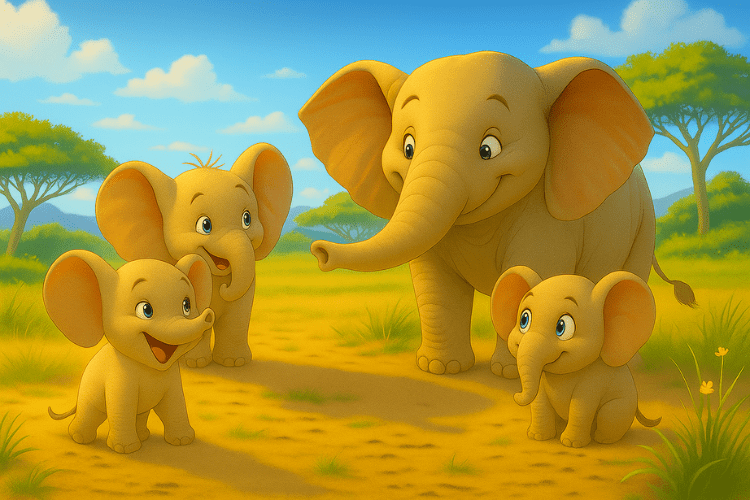
They also protect. When a calf is in danger, every adult female in the herd will circle it. Not just the mother – all of them. Aunts, sisters, grandmothers. The protection is communal, instinctive, total. No one asks who is responsible. Everyone just moves.
This is not coincidence. This is design. God, who crafted every living thing, wired the elephant with a capacity for loyalty, memory, and communal care that mirrors something He cares deeply about – the way we are meant to hold one another.
“God sets the lonely in families.” (Psalm 68:6)
The elephant did not read that verse. It just lives it.

The Biblical Mirror
Scripture is full of people who stayed. Ruth, who left her homeland to walk beside her grieving mother-in-law and said: “Where you go I will go. Where you die I will die.” (Ruth 1:16-17) Jonathan, who protected David even when it put him at odds with his own father the king. The disciples who stayed at the cross when everyone else had fled.
Loyalty in the Bible is never just a feeling. It is a choice made under pressure. It is staying when leaving is easier. It is remembering when forgetting would be simpler.
The Hebrew word used most often for this kind of faithful, steadfast love is hesed – sometimes translated as lovingkindness, sometimes as mercy, sometimes as loyalty. It is the word used to describe how God loves His people. Steadfast. Consistent. Not dependent on whether we deserve it that day.
Elephants carry something in their nature that points directly back to that word. They do not abandon their slow. They do not leave their mourning. They do not forget.
What an extraordinary thing – that God pressed the fingerprint of His own hesed into a grey, wrinkled, six-ton creature and sent it wandering the earth as a living sermon. When your child learns what an elephant does, they are learning something true about the character of God.
For Your Kids
Ages 5-7
Tell your child this: elephants never forget their friends. Ever. Even after years and years apart, they remember. Ask them: who is your most important friend right now? What would you do if that friend was sad? Help them draw a picture of that friend and write one kind thing they could do for them this week.
Ages 8-10
Ask your child to think of a time when it would have been easier to walk away from someone – a friend who was being left out, a sibling they were annoyed with, a classmate no one else wanted to sit with. Elephants protect the weakest member of the herd first. Who in their world might need that kind of protection? It does not have to be dramatic – sometimes protection just looks like one person deciding to stay.
Ages 11-13
Loyalty gets harder as kids get older because the social cost goes up. Sticking with the unpopular friend, defending someone being talked about, not laughing at the joke that goes too far – these all require something. Talk with your teenager about the word hesed – what it means that God describes His love for us using a word that means “I stay no matter what.” Ask them: when was the last time someone showed you that kind of loyalty? When did you show it to someone else?

This Week’s Challenge
One action: Look around your child’s world this week – school, church, sport, the neighbourhood. Is there someone on the edges? Someone the group tends to forget? As a family, do one thing to include them. It does not need to be big. An invitation. A text. Saving a seat.
One conversation: Ask everyone at dinner to answer this question – “What is one person in my life I want to be more loyal to? What would that actually look like?”
One verse: “A friend loves at all times, and a brother is born for a time of adversity.” (Proverbs 17:17) Write it on a sticky note. Put it somewhere your child will see it. Let the elephant be the reminder.

Family Activity: The Elephant Memory Game
Elephants carry the memory of their herd. This activity helps your family practise carrying each other.
What you need: Paper, pens, a bowl.
How to play:
- Each family member writes down three things about another person in the family that they love or appreciate – things that are specific and true. (“You always check on me when I am sad.” “You remembered my favourite colour even though I only said it once.” “You stayed up with me when I had a bad dream.”)
- Fold them up, put them in the bowl, and take turns drawing one out.
- Read it out loud. The person it describes has to guess who wrote it.
Discussion Starters
- What does it feel like to know someone remembers the small things about you?
- Is it easy or hard to be loyal when it costs you something?
- What do you think God feels when He sees His people staying for each other?
- If an elephant can carry loyalty in its nature, what do you think God is saying about how important it is?
A Prayer to Close
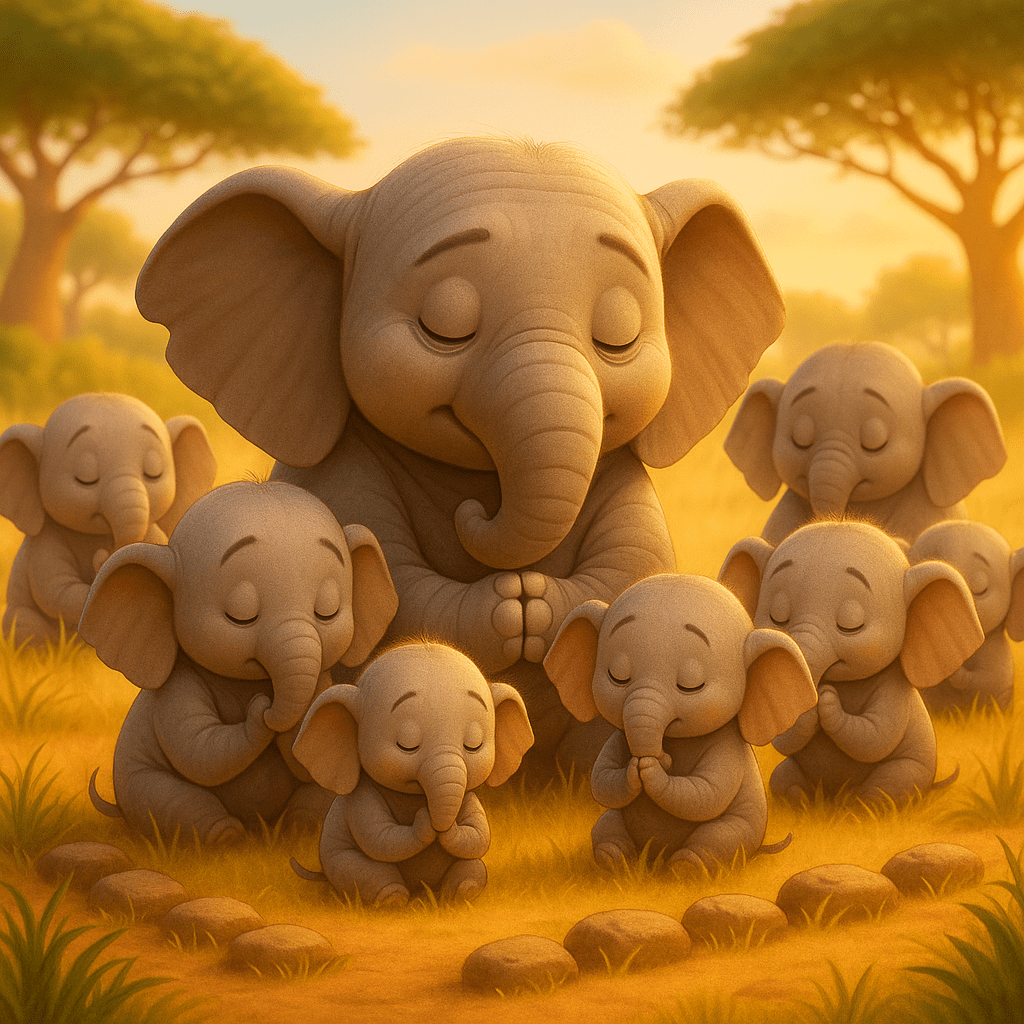
God, You are the most loyal being in the universe. You have never forgotten us. You have never abandoned us. You stay, even when we wander.
Thank You for elephants – for hiding this lesson inside a creature so big we cannot miss it. Help our family carry that same love. Help us be the ones who remember, who protect, who stay.
Teach us hesed (Hebrew for steadfast, unfailing love). Teach us to love the way You love.
Amen.
One Last Thing
The next time your child sees an elephant – at a zoo, in a book, in a film – remind them: that animal knows something about how God loves. It stays. It remembers. It circles around the weak one.
That is not just a nature fact. That is a sermon written in skin and bone.
God’s creation is not background scenery. It is a library. And every time we look closely enough, we find the same author’s voice on every page.