My daughter pressed her face against the glass of a beekeeper’s observation hive for a long time without saying anything. Thousands of bees moving through cells, passing food, fanning the honeycomb with their wings, capping cells with wax, dancing in tight figure-eights that the other bees somehow read like a map. Finally she said: “Everyone is doing something different but it all fits together.” She was eight. And she had just described what the body of Christ is supposed to look like, without knowing it.
Nobody told the bees to organize themselves this way. Nobody assigned roles at a meeting. The order emerges from each bee simply doing exactly what it was made to do. That is a picture worth spending time with.
What Bees Can Teach Us
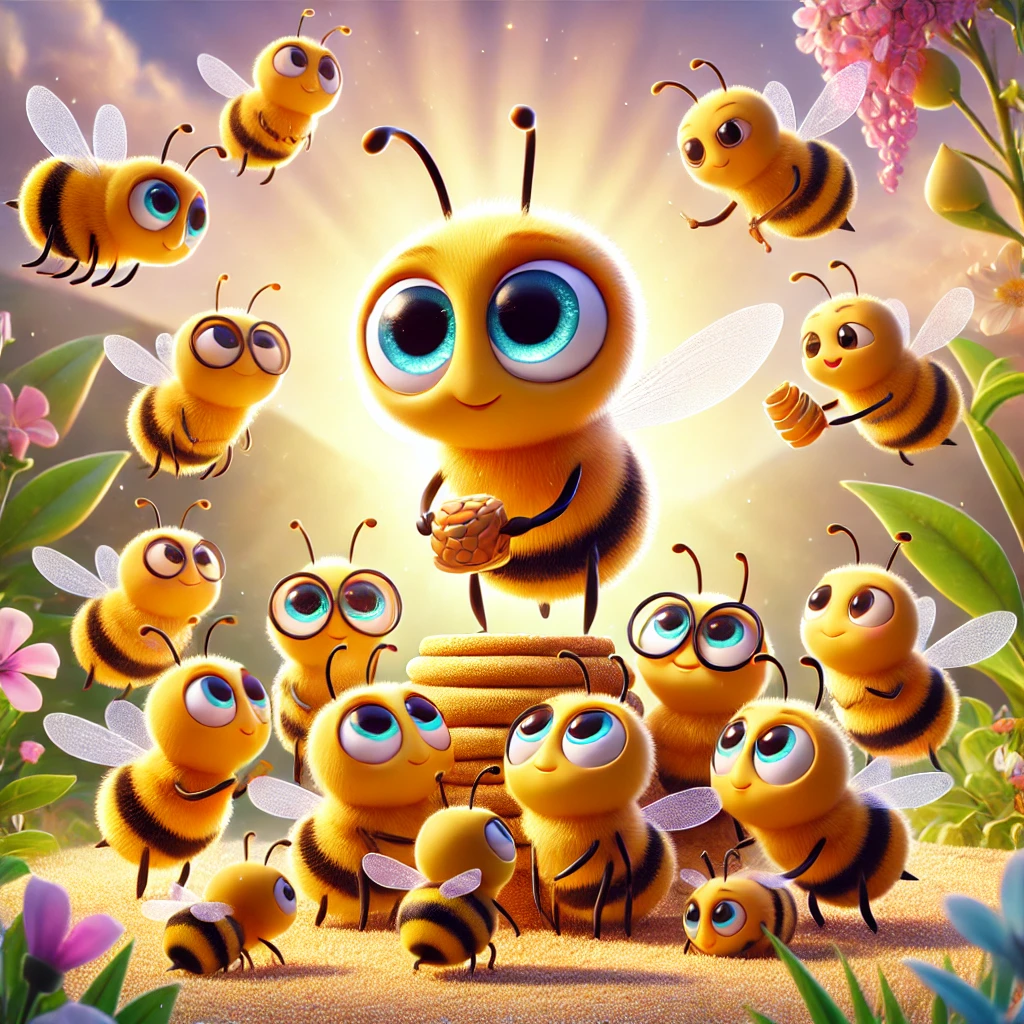
A honeybee colony can contain up to 80,000 individuals, yet it functions with a coherence that has fascinated scientists for centuries. The colony has no central manager issuing instructions. Each bee reads chemical signals called pheromones, responds to the behavior of other bees, and makes local decisions that together produce an extraordinary result. When a forager bee finds a rich food source, it returns to the hive and performs a “waggle dance” – a figure-eight movement whose duration and direction encode the precise distance and angle from the hive to the flowers. Other bees read the dance and fly directly to the source. Information becomes action becomes honey.
Worker bees change roles throughout their lives. A young worker bee spends her first days cleaning cells, then transitions to nursing larvae, then to building comb, then to guarding the hive entrance, and finally, at around three weeks old, to foraging for nectar and pollen outside the hive. She performs each role completely and without hesitation, and then moves to the next as her biological clock advances. No single bee can produce honey alone. No single bee knows the whole plan. But each one, faithful to its current role, contributes to something far larger than itself.
The waggle dance is a remarkable piece of creation that scientists spent decades decoding. The angle of the central run relative to vertical corresponds to the angle of the food source relative to the sun. The duration of the waggle corresponds to the distance. Bees communicate abstract concepts – direction, distance, quality – through movement in the dark of the hive. They have been navigating the world and sharing that navigation with each other for millions of years, using a language built entirely on purpose and embodied exactly as it was designed.
God built purpose into every bee – not a vague sense of calling, but a specific, embedded, biologically timed assignment that shifts as the bee matures. Every role is necessary. The cleaner and the forager are equally essential. The hive cannot produce honey without both. When any part fails, the whole is affected. This is not metaphor. It is engineering. And it maps almost exactly onto the way God describes the community of believers.
The Biblical Mirror
1 Corinthians 12 is Paul’s most extended treatment of what the community of faith is supposed to look like – and he uses the human body as his image, but bees would have worked just as well. “Just as a body, though one, has many parts, but all its many parts form one body, so it is with Christ” (1 Corinthians 12:12). Paul then goes to some lengths to make the case that the less visible parts are not less important – that the foot is not less necessary than the hand, that the ear is not less valuable than the eye. Every role matters. The temptation is always to rank, to compare, to measure one calling against another. Paul forbids it.
What makes Paul’s argument particularly striking is verse 22: “On the contrary, those parts of the body that seem to be weaker are indispensable.” The bee that cleans the cells is not less important than the forager who brings back nectar. In fact, without clean cells, there is nowhere to put the honey. The most invisible work is often what makes the visible work possible. This is one of the most countercultural truths in scripture: significance does not require visibility. Faithful, ordinary, unrecognized work done in its proper role is indispensable.
Ephesians 4:16 captures the bee hive dynamic almost exactly: “From him the whole body, joined and held together by every supporting ligament, grows and builds itself up in love, as each part does its work.” The growth happens when each part does its work – not someone else’s work, not the most glamorous work, but its own particular work, done faithfully in its season. The hive produces honey when every bee is doing what it was made to do. The body of Christ builds itself up in love when every member is exercising the gifts God gave them.
For Your Kids
Ages 5-7
Young children respond wonderfully to the concrete story of the bee hive – the different jobs, the dancing, the honey-making. Keep it tactile and narrative: “Every single bee in the hive has an important job. If the bees who clean the cells stopped, the bees who make honey would have nowhere to put it. Every job matters, even the ones nobody sees.” Then connect it to their world: “In our family, everyone has important jobs. When you put your dishes away, that helps all of us. Your job matters.” Help them feel the dignity of their contribution to the family hive, however small.
Ages 8-10
Kids this age are beginning to compare themselves to others and to wonder if their gifts and abilities are good enough or important enough. The bee’s life cycle is a perfect corrective: every bee does every job, and every job matters, and what you do right now is exactly right for this moment in your life. Ask your child: “What do you think you are really good at – something God put in you that is genuinely yours? How could that be useful to people around you?” Help them see that gifts are not for impressing people – they are for contributing to something larger than yourself.
Ages 11-13
Preteens are beginning the process of figuring out who they are and what they are for – a process that can feel overwhelming. The pressure to find The Big Purpose early is intense. This is a good age to introduce the idea that purpose is often seasonal – that the bee who cleans cells now will be the bee who forages later, and both are equally her purpose in their time. Ask your preteen: “What do you think God is calling you to do or be right now – not in ten years, but this year, this month? What would it look like to be fully faithful to that, even if it seems small?” The discipline of faithfulness in small things is what prepares someone for larger ones.
This Week’s Challenge
One Action
Do a family “gift inventory” this week. Each person names one gift, ability, or characteristic they believe God gave them – something that comes naturally, something they love doing, something others have said they are good at. Then together, brainstorm one specific way each person could use that gift to serve someone outside your immediate family in the next two weeks. Make a plan and follow through.
One Conversation Starter
The bee who cleans the cells never sees the finished honey. The bee who caps the cells never forages for nectar. But the honey only exists because every bee was faithful to its part. Can you think of something beautiful that exists in your life because many people were faithful to their part, even if they never saw the final result?
One Verse
“Each of you should use whatever gift you have received to serve others, as faithful stewards of God’s grace in its various forms.” – 1 Peter 4:10
Family Activity
Make honey together – or simply eat some on fresh bread while you talk. If you can get raw local honey, let the kids look at it in the light and talk about how many bees worked for how many hours to produce it. One jar of honey represents about 80,000 bee trips and two million flowers. Then ask each family member to name one “honey” in their life – something beautiful that exists because many people contributed their small part faithfully.
Then explore these questions:
Discussion Starters
- The bee hive has no manager – every bee reads signals and makes decisions based on its role. What does it look like for you to “read the signals” in your family or community and respond with what you have been given?
- Paul says the parts of the body that seem weaker are actually indispensable. Can you think of someone in your life whose contribution is not very visible but who is actually essential? How could you honor that this week?
- The forager bee dances to share what she discovered – she does not keep the information to herself. What is something you know or can do that you have been keeping to yourself? Who needs what you have?
- Worker bees change roles as they grow – what is right for them at three days old is different from what is right at three weeks. What feels like your current role in your family? In your faith community? Are you fully doing it?
- One jar of honey represents two million flower visits. What is something big and beautiful that you want to contribute to – even if your part feels very small right now?
A Prayer to Close
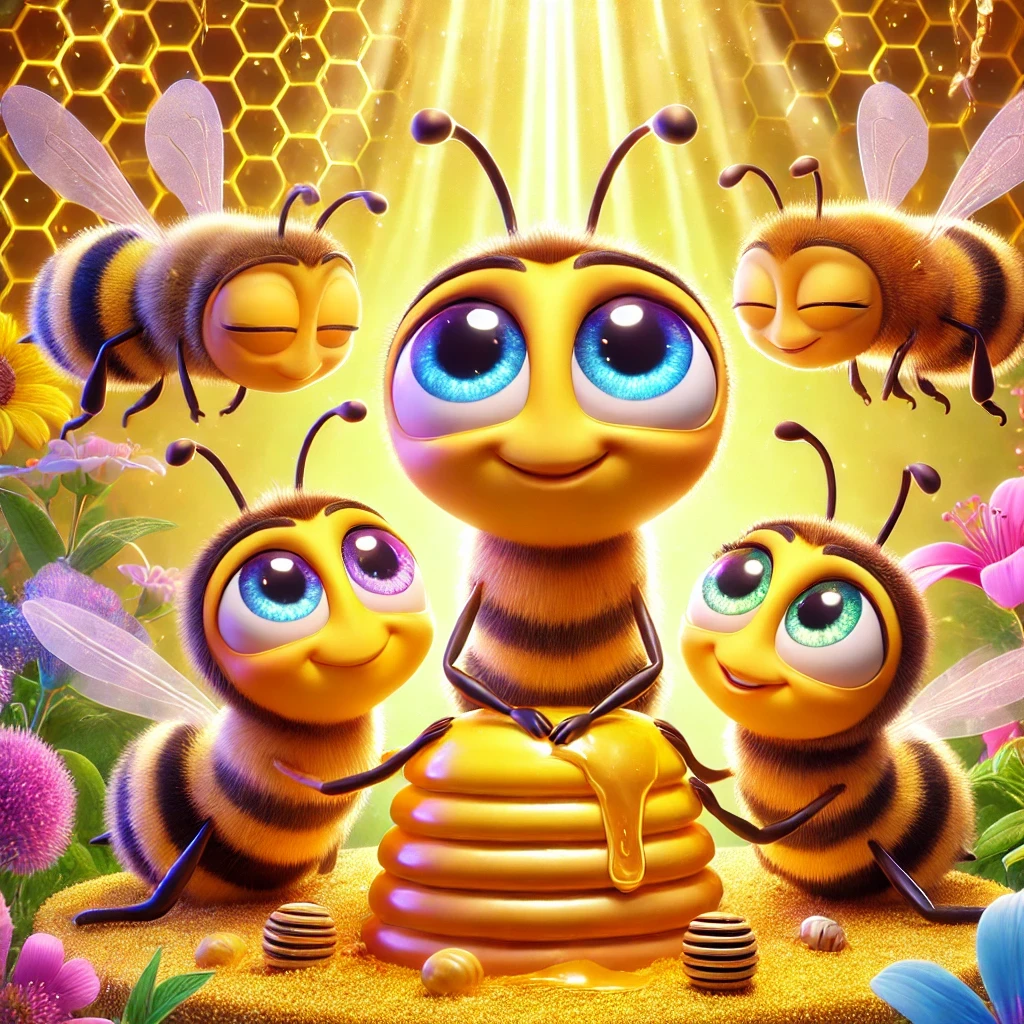
Lord, You designed the bee hive as a picture of what community can look like when every member is faithful to its purpose. Thank You that You gave each of us specific gifts – not for our own benefit alone, but to contribute to something larger than ourselves. Forgive us when we have hidden what You gave us, or envied what You gave someone else, or thought our part was too small to matter. Teach our family to be faithful bees – to do our current work fully, to share what we discover, to trust that You are coordinating what we cannot see. May what we contribute, however small, be part of the honey. Amen.
One Last Thing
My daughter walked away from that observation hive with the clearest theology lesson she had received in weeks – and nobody had to explain any of it. She just watched and the truth showed itself. The order was already there, built in, running on purpose. Every bee exactly where it needed to be, doing exactly what it was made to do, contributing to something it would never fully comprehend on its own.
That is what God is doing in your family, in your community, in his people across the world. The honey is real. Your part matters. Do not let anyone convince you otherwise – and do not let your children grow up believing the lie that small, faithful, ordinary work is insignificant. The hive runs on it. Want to learn more about these amazing creatures? Explore honeybees at National Geographic Kids.
Want more stories like this? Explore our Character Tales for more animal stories that teach real virtues, or grab a free printable activity to take the lesson further.