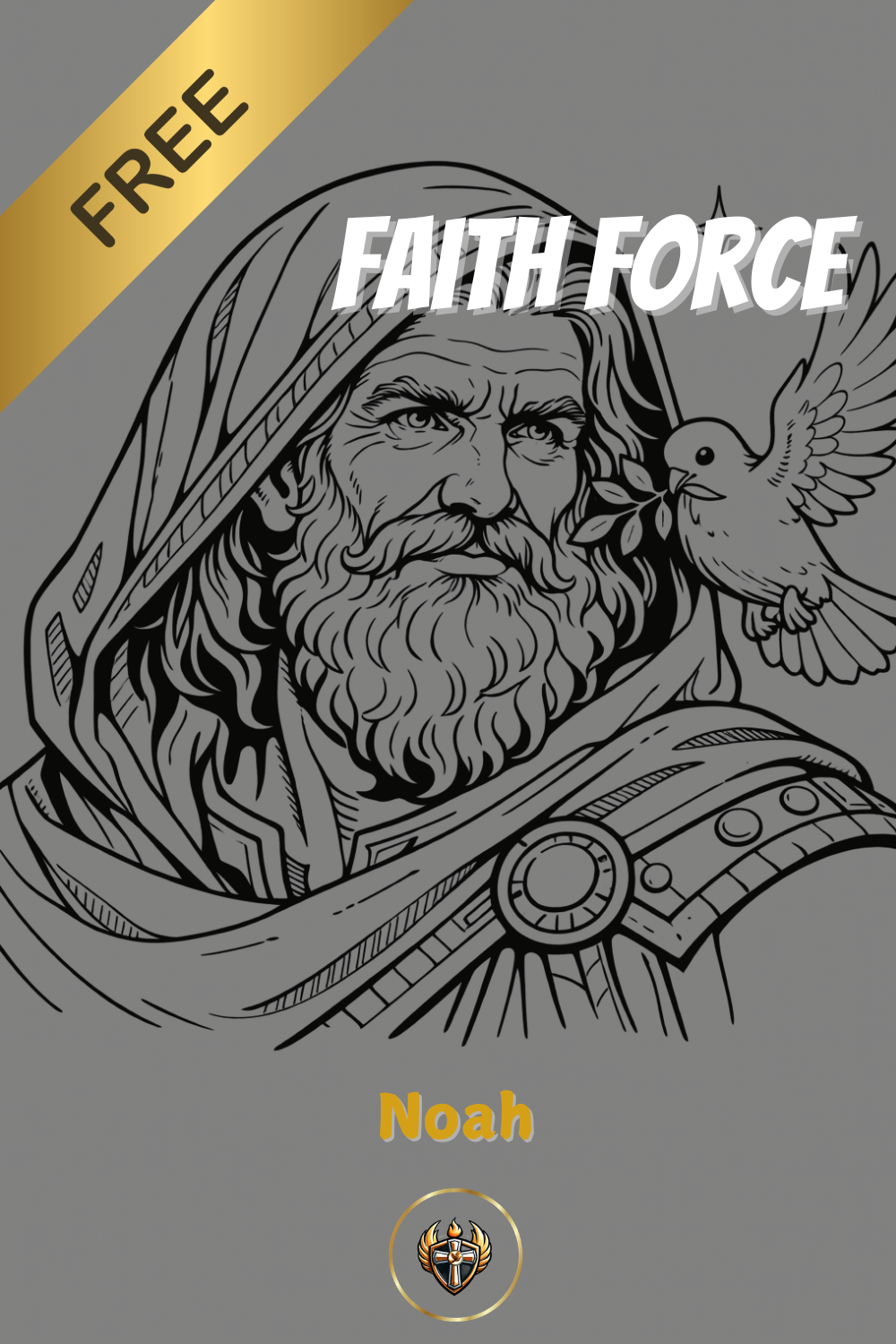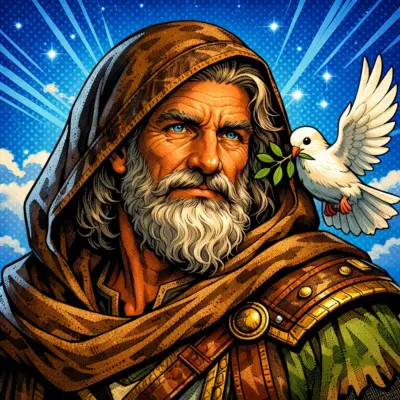
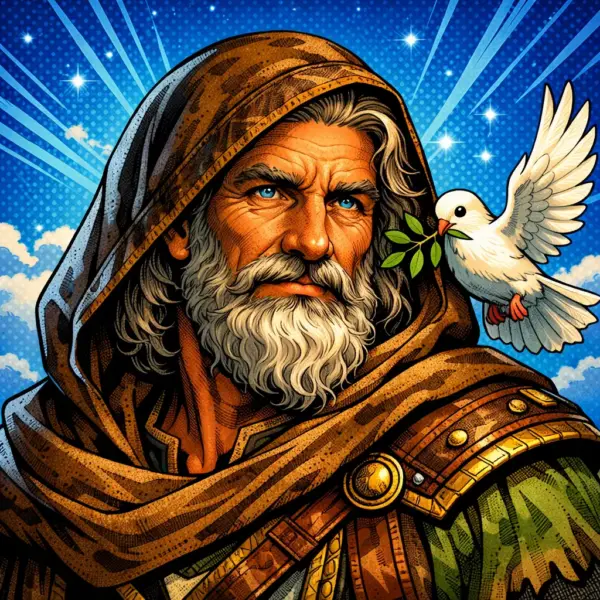
Noah's Journey
The earth had become corrupt and full of violence. God saw how great human wickedness had become, and His heart was deeply troubled.
Noah, however, found favour in the eyes of the Lord. Genesis describes him as righteous, blameless among the people of his time and walking faithfully with God.
God told Noah that He would bring judgment through a flood. He commanded Noah to build an ark with specific dimensions, prepare rooms inside it and cover it with pitch.
God promised to establish His covenant with Noah. Noah, his wife, his sons and their wives would enter the ark, together with the animals God specified. Noah was also commanded to store food.
Noah did everything just as God commanded him.
Who Was Noah?
Noah was the son of Lamech and a descendant of Seth. He became the father of Shem, Ham and Japheth.
Genesis describes Noah as a righteous man who was blameless among the people of his time and walked faithfully with God. This does not mean that Noah was sinless. Genesis 9 later records a serious failure involving drunkenness.
The New Testament describes Noah as an example of faith and calls him a preacher of righteousness. However, Scripture does not tell us exactly what Noah preached during the ark’s construction or describe people laughing at him.
What Genesis clearly emphasises is that Noah received God’s instructions and carried them out.
Hebrews 11:7 connects Noah’s actions with faith. 2 Peter 2:5 calls him a preacher of righteousness.
Noah’s Journey
Building the ark was an enormous task. God gave Noah its measurements and instructed him to prepare space and food for his household and the animals.
Scripture does not tell us how many years construction required, how Noah felt while building or how other people reacted.
What the text states repeatedly is that Noah did what God commanded.
God initially told Noah that two of every kind of living creature would come to him. Genesis 7 then specifies seven pairs of every clean animal and every kind of bird, and one pair of every unclean animal.
This is stated in Genesis 6:19–20 and 7:2–3.
The flood account is a serious story of judgment as well as preservation.
Genesis says that the earth was corrupt and full of violence. God was grieved by human wickedness and announced that life outside the ark would perish.
The rain fell for forty days and nights, and the waters flooded the earth for 150 days. Noah and those with him in the ark survived, while the land-dwelling people and creatures outside it died.
The story should not be reduced to a cheerful animal-rescue adventure. At the same time, children do not need graphic descriptions of death. Parents can explain honestly that human violence and corruption brought terrible judgment and that God preserved Noah’s household and the animals in the ark.
Modern floods or disasters should not be treated as proof that the people affected are personally more sinful than others. Genesis identifies this particular flood as a specific act of judgment.
The floodwaters remained for many months. God remembered Noah and the animals, sent a wind and caused the waters to recede.
Noah sent out a raven and then a dove to determine whether the ground had dried. The dove eventually returned with an olive leaf.
Even after Noah saw that the surface was dry, he did not simply leave. He came out after God commanded him to leave the ark.
Genesis records these events in Genesis 8.
After leaving the ark, Noah built an altar and offered sacrifices to the Lord.
God then established His covenant with Noah, Noah’s descendants and every living creature. God promised that never again would all life be destroyed by the waters of a flood.
God set the rainbow in the clouds as the sign of this covenant between Himself and the earth.
The covenant was not merely a private promise to Noah or a reward Noah earned. It extended to his descendants and every living creature, as recorded in Genesis 9:8–17.
Noah’s story did not end with the rainbow.
Noah later planted a vineyard, drank its wine and became drunk. He lay uncovered inside his tent. Ham saw him and told his brothers, while Shem and Japheth respectfully covered their father without looking at him.
When Noah awoke, he cursed Canaan and blessed Shem and Japheth. Genesis does not fully explain every part of this difficult family episode, including why Canaan received the curse.
The account reminds us that Noah was not sinless. A person can demonstrate genuine faith and obedience while still making seriously wrong choices.
What This Noah Bible Story Teaches Kids
Noah lived in a violent and corrupt world, but he walked faithfully with God. When God gave him clear instructions, Noah carried them out.
Noah’s obedience was connected to faith. Hebrews 11:7 says that Noah acted by faith when warned about events not yet seen.
However, Scripture does not say that Noah obeyed an unexplained inner voice, built without any evidence that God had spoken or followed a personal impression that nobody else could verify. Genesis records a specific command and detailed instructions from God.
Noah’s story therefore does not teach children to perform unusual, secret or dangerous actions because they believe God personally told them to do so.
Children practise biblical obedience by following what Scripture clearly teaches, completing safe responsibilities and seeking guidance from trustworthy adults.
Noah’s later drunkenness also shows that biblical heroes were not flawless. The Bible records both his faithful obedience and his failure.
Noah received a particular command in a unique biblical event. Children should not assume that every voice, dream, thought or strong feeling comes from God.
Biblical obedience never requires a child to accept abuse, keep a harmful secret, leave safety, hurt someone or follow a dangerous instruction.
Any idea involving danger, secrecy or harm should be rejected and immediately discussed with a trusted adult.
Noah’s completed Hero Mission explores faith: trusting God enough to obey what He has made clear and taking one safe, clearly right step at a time.
Put the story into action – explore Noah’s Faith, a completed Bible hero mission for kids inspired by this hero. To read Noah’s story, explore Genesis 6–9 on Bible Gateway.
Greatest Feats
Entered and Left at God’s Command: Noah entered the ark with his wife, sons and daughters-in-law. After the waters receded and the ground dried, he left when God told him to come out.
Built an Altar: After leaving the ark, Noah built an altar and offered sacrifices to the Lord.
Obeyed God’s Instructions: Genesis twice emphasises that Noah did what the Lord commanded him.
Key Conflict
Allies
Noah’s Family: Noah’s wife, his sons Shem, Ham and Japheth and their wives entered and left the ark with him. Scripture records their participation but does not tell us that they entered because they trusted Noah.
Shem and Japheth: After Noah became drunk and lay uncovered, Shem and Japheth treated their father’s vulnerability with care by covering him without looking at him.