My son was seven when he asked me why the lion at the zoo just sat there. We had waited twenty minutes at the enclosure, expecting roaring and pacing, and instead the lion was utterly still – stretched out on a rock, watching the crowd with calm, heavy eyes. My son was almost offended. “Why is he not doing anything?” But the lion was doing something. He was being exactly what he was. And everyone who looked at him knew it.
There is a kind of authority that does not need to announce itself. The lion did not need to perform. His presence was enough. That is worth unpacking for our kids – and maybe for ourselves.
What Lions Can Teach Us
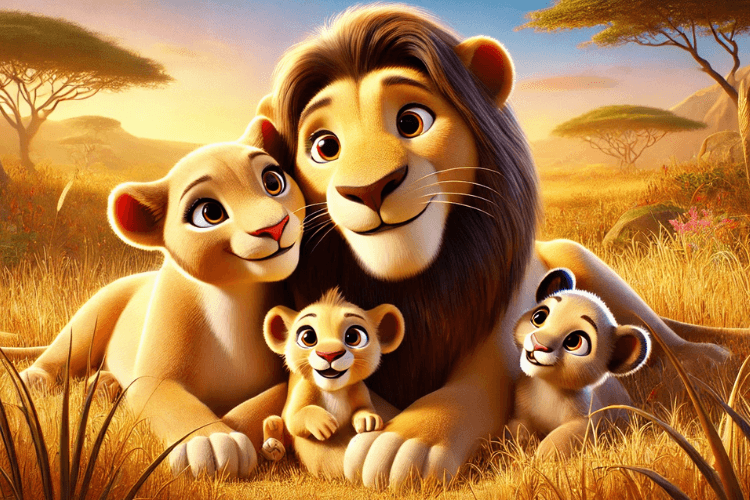
Lions are the only truly social cats in the world. While tigers and leopards live and hunt alone, lions live in prides – extended family groups that can include up to forty individuals. The pride is not just convenient. It is essential. Lions defend territory together, raise cubs communally, and coordinate hunts that individual animals could never pull off alone. The famous image of the lone, regal lion is misleading. Real lions thrive in relationship and are diminished without it.
Male lions are often described primarily by their manes and their roar – but their actual role in the pride is more nuanced than the stereotypes suggest. While lionesses do the majority of the hunting, male lions serve a critical protective function. They patrol territory boundaries, confront rival males, and defend cubs against predators like hyenas and leopards. A coalition of male lions – brothers or cousins who grew up together – can hold territory far longer and more effectively than a single male. Their courage is amplified by their brotherhood.
A lion’s roar can be heard from five miles away. It is not primarily a threat display. It is a declaration of presence – a communication to the rest of the pride and to potential rivals: I am here, and I know who I am. Researchers have observed that lions roar most frequently at dusk and dawn, in the liminal moments between light and dark. There is something almost devotional about it. At the threshold of each new day, the lion announces itself to the world.
What God built into the lion is a picture of courage that is communal, protective, and unhurried. The lion does not charge frantically. It moves with deliberate weight. Its boldness is inseparable from its identity – it does not need to work itself up to be brave. It simply is what it was made to be, and that is enough to change the atmosphere of whatever room it enters.
The Biblical Mirror
The lion appears more than 150 times in scripture, and almost always as a symbol of righteous power. Jesus himself is called the Lion of the Tribe of Judah (Revelation 5:5). Proverbs 28:1 draws the parallel plainly: “The wicked flee though no one pursues, but the righteous are as bold as a lion.” This is not describing physical strength or volume. It is describing a settled confidence that comes from knowing you are aligned with truth. The lion does not flee from shadows. And the righteous person who walks with God does not need to either.
Consider Daniel. Thrown into a den of lions as punishment for praying to God when the law forbade it, Daniel did not scramble for a compromise or hide his faith to survive. He prayed openly, by his window, facing Jerusalem, three times a day – as was his custom. His courage was not a single dramatic moment. It was a daily practice that had become who he was. When the lions surrounded him that night, Daniel rested. God shut the mouths of the lions, and Daniel emerged without a scratch. The man who lived like a lion was protected by them.
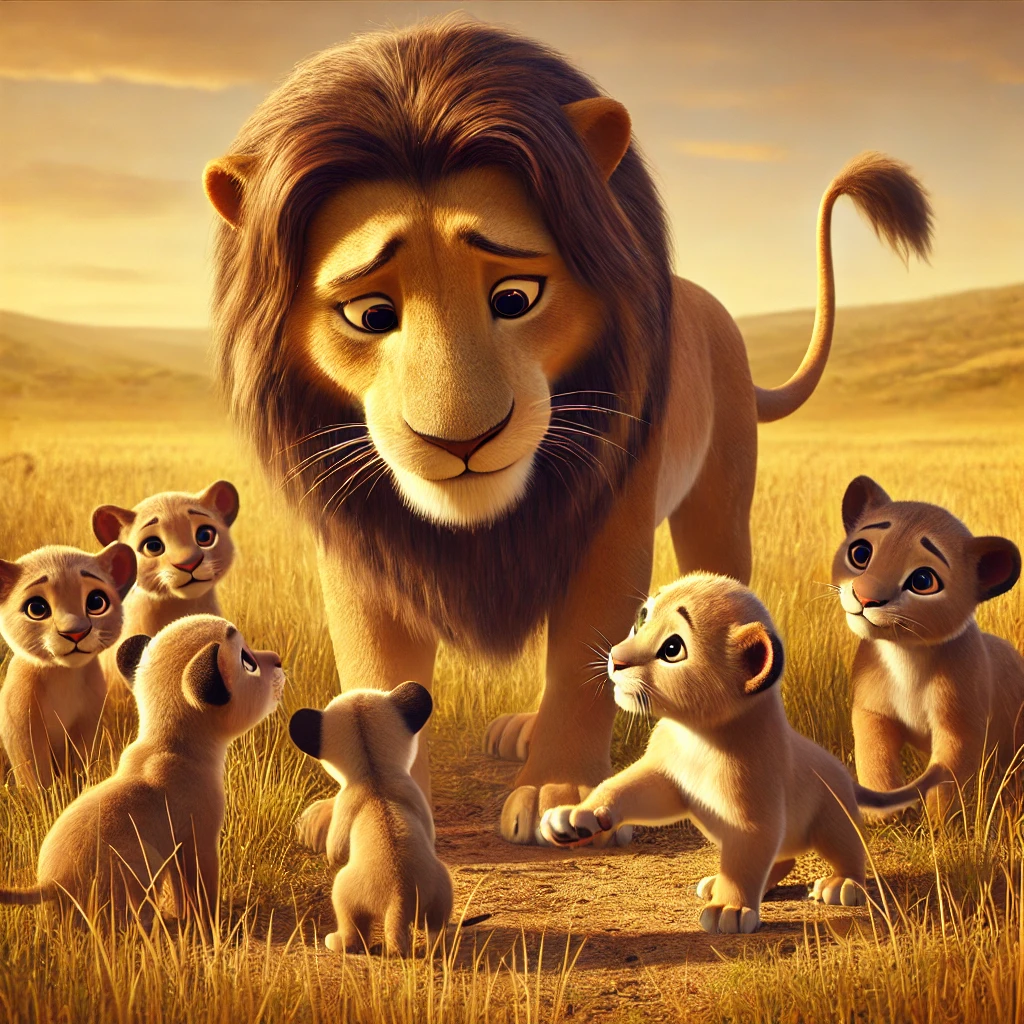
The protection of the weak is woven throughout scripture as one of the most consistent expressions of godly courage. Isaiah 1:17 calls us to “defend the oppressed.” Proverbs 31:8 says to “speak up for those who cannot speak for themselves.” The biblical lion does not use its strength to dominate the vulnerable. It uses its strength to stand between the vulnerable and whatever threatens them. That is righteous boldness – courage in service of love.
For Your Kids
Ages 5-7
Young children understand bravery in very concrete terms – standing up to the mean kid at the playground, telling the truth when it is scary, saying sorry even when it is hard. Meet them there. “Do you know what a lion does when something smaller is being hurt? It steps in. That is what brave looks like – not being scary, but standing up for someone who needs help.” Read Daniel in the lions’ den together and let the simplicity of the story carry the weight: Daniel was not afraid because he knew God was with him. Your child can know that too.
Ages 8-10
At this age, kids are increasingly aware of peer pressure, social hierarchies, and the cost of standing out. Talk about the difference between being brave for yourself and being brave for someone else. Lions protect their pride – they do not just display strength; they use it for others. Ask your child: “When have you stood up for someone even when it was uncomfortable? When have you wished you had?” Help them see that the boldness God calls us to is not about being fearless – it is about acting rightly even when you are afraid, because you know who you belong to.
Ages 11-13
Preteens face a more subtle form of fear than little kids do – the fear of being rejected, misunderstood, or seen as different. This is where Proverbs 28:1 becomes personal. Talk about what it looks like to be as bold as a lion in a social setting – not loud or aggressive, but settled and unafraid. Ask them: “Is there something you believe that you have been keeping quiet because you worried what people would think?” Discuss Daniel’s daily prayer habit – he was not brave in one big moment. He was brave in thousands of small ones, and that is what prepared him for the den.

This Week’s Challenge
One Action
Each family member identifies one person in their life who could use someone to stand with them this week – a classmate being left out, a friend going through something hard, a sibling who needs defending. Do one concrete thing to stand with that person. Report back to each other at the end of the week.
One Conversation Starter
A lion’s roar at dawn is a declaration: I am here and I know who I am. What would it sound like if you declared who you are – not to be noticed, but because it is simply true? What is one thing you believe so deeply that you would not stay quiet about it, even if it cost you something?
One Verse
“The wicked flee though no one pursues, but the righteous are as bold as a lion.” – Proverbs 28:1
Family Activity
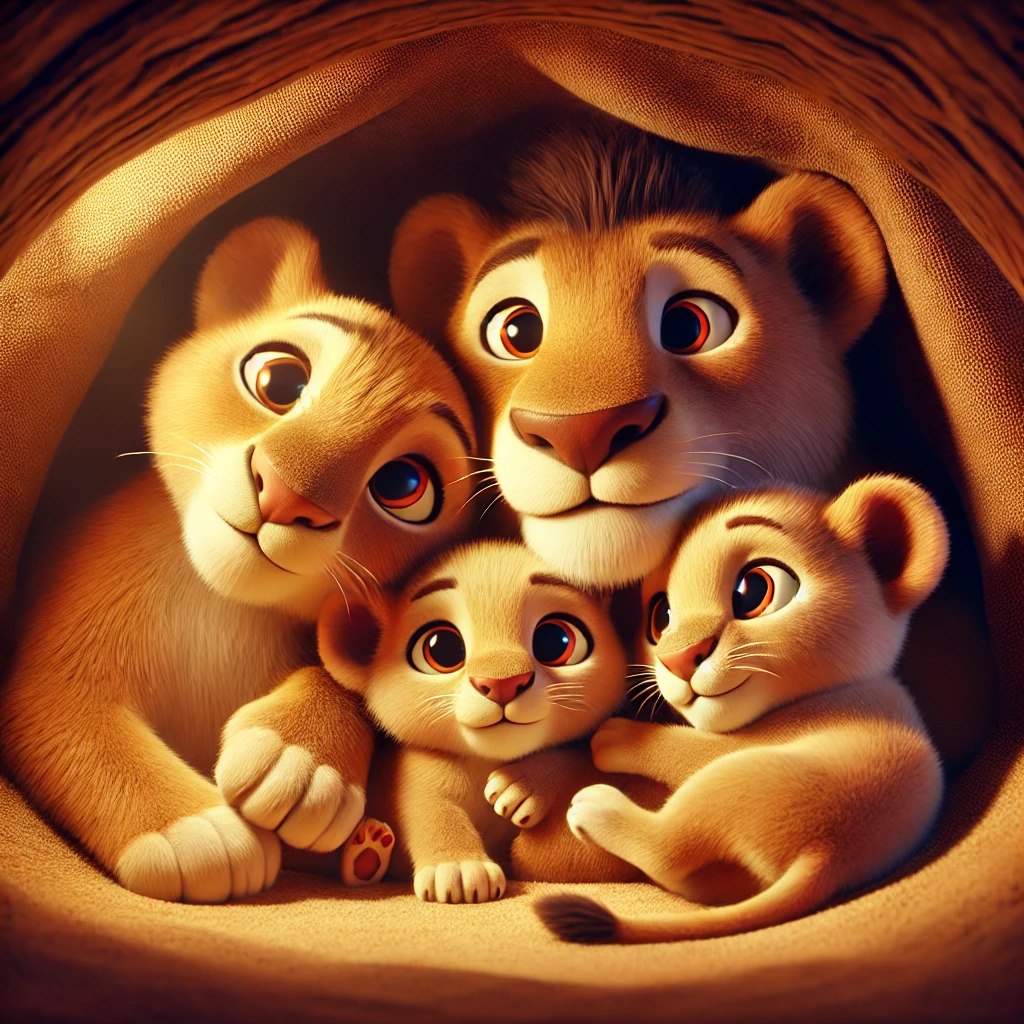
Sit together and give each person a piece of paper. At the top, write: “I will be brave enough to…” Each family member completes that sentence three times – once for something at home, once for something at school or work, and once for something in their faith. Share them out loud. Then together as a family, choose one collective act of courage to do this week – something that requires you to show up for someone outside your comfortable circle.
Talk through these questions as you go:
Discussion Starters
- Male lions in a coalition are often brothers who grew up together. Why do you think courage is easier when you have people beside you? Who are the people who make you braver?
- Daniel prayed every day, in the open, even when it was illegal. He did not start being brave the day they threw him in the den. His courage was built in thousands of small moments. What small act of courage could you practice every day?
- The righteous are as bold as a lion – not because they are never afraid, but because they know who they belong to. When is it hardest for you to feel that settled confidence in God?
- Lions use their strength to protect, not to dominate. When you are strong or confident in a situation, how do you decide whether to use that strength for yourself or for someone else?
- Is there someone in your life right now who needs a lion in their corner? What would it look like to be that person for them?
A Prayer to Close
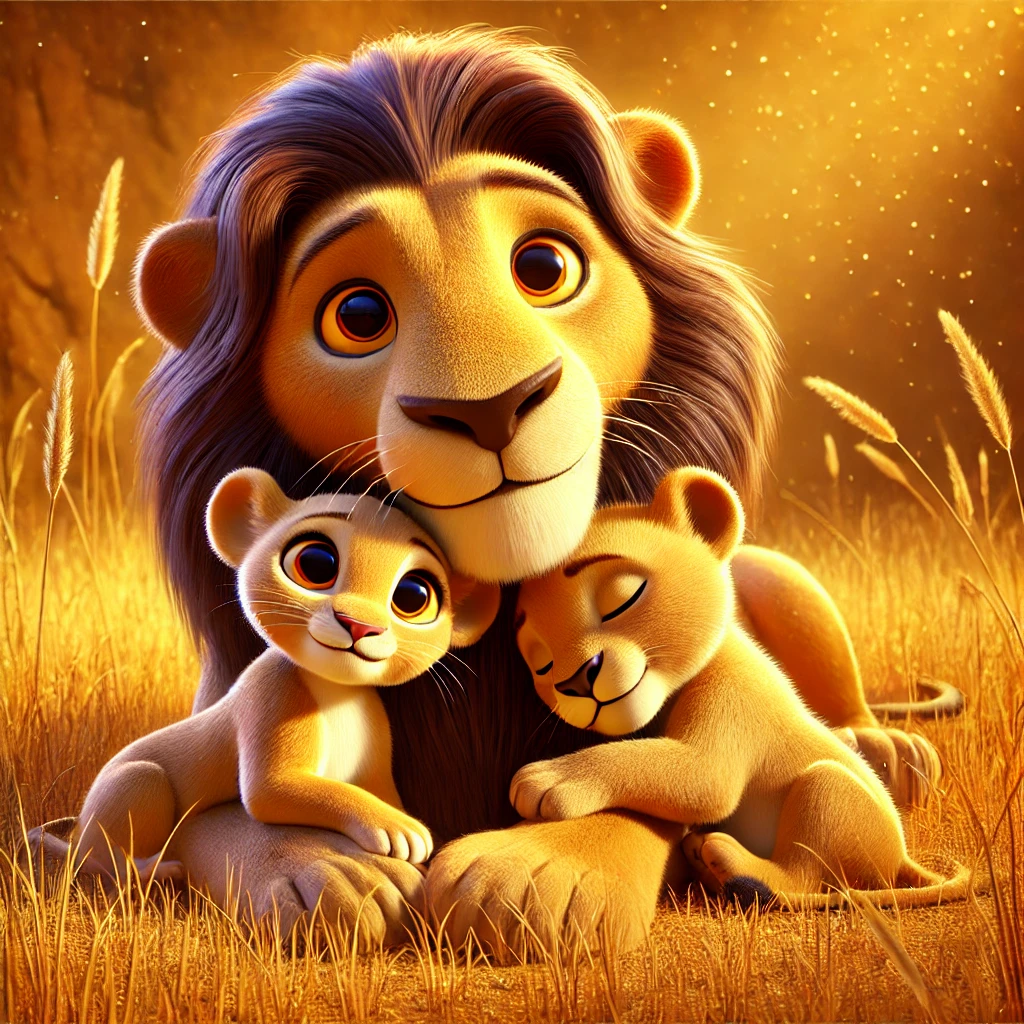
God, You are the Lion of Judah – and You made us to carry something of that same bold, settled courage. Forgive us for the times we have fled from things that could not hurt us, or stayed silent when someone needed a voice. Build in us a daily courage that does not depend on circumstances – a confidence that comes from knowing who You are and who we are because of You. Teach our kids to stand up for the weak, tell the truth at a cost, and walk into hard days without fear. You are with us. That is enough. Amen.
One Last Thing
My son eventually understood why the lion at the zoo just sat there. On the way home he said, “Dad, he did not need to try to look scary. He just was.” That is exactly it. The kind of courage God builds in us is not a performance. It is not volume or bluster or bravado. It is a deep knowing that settles into your bones when you have spent enough time with God – a calm certainty that you are held, that you are not alone, and that what is right is worth standing for no matter what it costs.
Your children are watching you for evidence that this kind of courage is real. It does not require dramatic moments. It requires daily practice – the small choices to speak truth, to stay tender toward the weak, to pray openly even when it is inconvenient. That is how the lion in them grows. One quiet, steady, faithful day at a time. Want to learn more about these amazing creatures? Explore lions at National Geographic Kids.
Want more stories like this? Explore our Character Tales for more animal stories that teach real virtues, or grab a free printable activity to take the lesson further.