
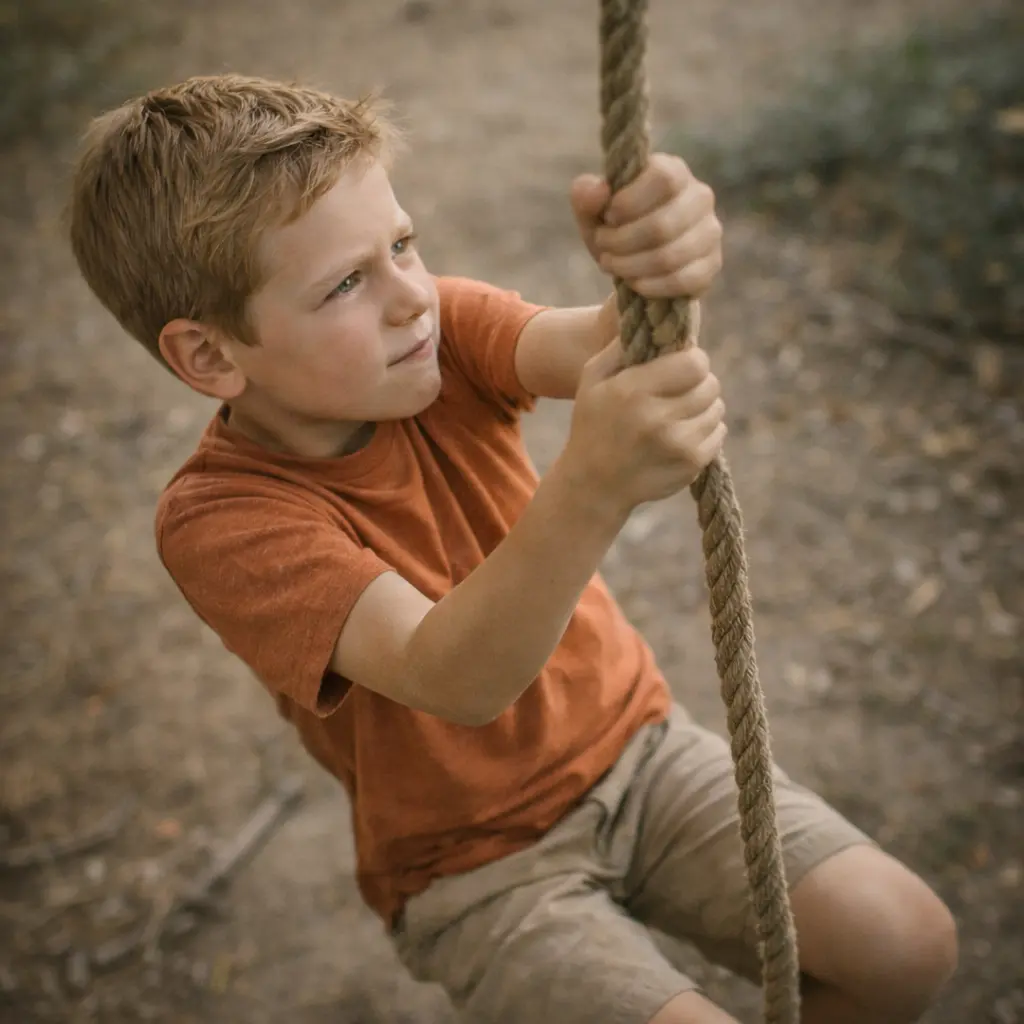
Your child does not make the team. Or they fail the test they studied hard for. Or the friendship they thought was solid falls apart suddenly and publicly. And you watch them crumple – not dramatically, just the quiet collapse of someone who believed something was going to go one way and it went the other. And your instinct, as the parent who loves them, is to fix it. To call the coach, to talk to the teacher, to intervene with the friend. To make the pain stop as quickly as possible.
Or maybe it is less acute than that. It is the child who gives up on anything hard the moment it stops being easy – the instrument abandoned after three weeks, the sport dropped the first time they were not immediately good at it, the subject written off as soon as it required real effort. The low frustration tolerance. The “I can’t do this” that arrives before they have genuinely tried. And underneath your concern about the specific situation is a larger worry: am I raising a child who can handle the hard things that are coming? Because the hard things are coming. And I cannot be there for all of them.
Here is what the research says about how resilience actually forms in children – and what parents do that builds it versus what accidentally undermines it.
Why Resilience Cannot Be Taught – Only Built
Dr. Ann Masten, University of Minnesota psychologist and one of the world’s leading resilience researchers, spent decades studying children who came through significant adversity – poverty, trauma, family disruption – and emerged functioning well. Her landmark finding, which she called “ordinary magic,” was this: resilience is not a rare trait possessed by exceptional children. It is a common capacity that develops in ordinary children through ordinary processes – when the right conditions are present.
The most consistent predictor of resilience in Masten’s research was not the absence of difficulty. It was the presence of at least one stable, caring adult relationship. Children who had someone in their corner – someone who believed in them, stayed present through the hard thing, and helped them make meaning of what they were going through – developed resilience. Children who faced difficulty alone, or whose difficulty was always removed before they had to grapple with it, did not.
Dr. Martin Seligman, founder of positive psychology and author of The Optimistic Child, adds the cognitive dimension: resilience is significantly shaped by how a child explains difficulty to themselves. Children who attribute setbacks to permanent, global, personal causes – “I always fail, I am bad at everything, there is something wrong with me” – develop what Seligman calls learned helplessness: a genuine belief that effort does not change outcomes. Children who attribute setbacks to temporary, specific, changeable causes – “that was hard, I need more practice, I can try differently” – develop the optimistic explanatory style that underpins genuine resilience. That explanatory style is not fixed. It is learned – largely from the adults around them.
What Is Actually Happening When a Child Gives Up
When your child says “I can’t do this” and stops – it is almost never about the specific task. It is about what they believe that task’s difficulty means about them. Seligman’s research on explanatory style shows that children who give up quickly have usually developed a belief that difficulty is evidence of inadequacy – that struggling means failing, that needing to try more than once means you are not good enough. That belief, once established, becomes a filter through which every new challenge is processed.
Dr. Carol Dweck’s research on mindset adds the mechanism: children with a fixed mindset believe that ability is static – you either have it or you do not. Struggle, for a fixed mindset child, is evidence that they do not have it. Children with a growth mindset believe that ability is developed through effort and practice. Struggle, for a growth mindset child, is evidence that they are in the process of developing it. The difference in persistence, risk-taking, and recovery from setbacks between these two groups is substantial – and the mindset is shaped primarily by the feedback and framing children receive from the adults around them, especially parents.
What the Bible Says About This
Scripture does not promise an easy road. It promises something better – a God who walks the hard road with us and does not waste any of it.
“We also glory in our sufferings, because we know that suffering produces perseverance; perseverance, character; and character, hope.” – Romans 5:3-4
This is the biblical version of the growth mindset – and it goes deeper. Not just “struggle develops ability” but “suffering produces perseverance, which produces character, which produces hope.” The hard thing is not a detour from the good life. It is part of the path to maturity. Helping children understand this – that difficulty is not evidence that something has gone wrong, but that something is being built – is one of the most resilience-forming things a parent can do. You are not reframing pain as pleasant. You are giving it meaning. And meaning is what makes hard things survivable.
“My grace is sufficient for you, for my power is made perfect in weakness.” – 2 Corinthians 12:9
This is where faith-rooted resilience goes beyond anything secular psychology can offer. It is not “you are stronger than you think.” It is “God’s strength is made perfect in the place where yours runs out.” A child who has genuinely experienced this – who has prayed in a hard moment and felt something shift, who has come through something that was beyond them and knows why – has a resilience resource that does not deplete. The source is inexhaustible. Teaching children to access it is one of the most practical and lasting gifts a faith-filled family can give.
What This Looks Like at Different Ages
Ages 4 – 6: At this age the most important thing is not problem-solving – it is presence and language. When your child faces a setback, sit with them before you fix anything. “That is really disappointing. It is okay to feel sad about that.” Then, when the feeling has been acknowledged: “What do you want to try next?” You are building two things simultaneously: the belief that hard feelings are survivable (they passed, I am still okay) and the habit of turning back toward the problem after the feeling. That sequence – feel it, then try again – is the foundation of resilience.
Ages 7 – 9: This is the age to introduce the explanatory style directly – not as a lecture but as a reframe in real moments. When your child says “I am terrible at this,” gently correct the framing: “You have not learned it yet. There is a difference.” When they fail, ask: “What is one thing you could try differently?” Help them build a memory bank of times they have already been resilient – times they found hard and got through. Ask: “Remember when you could not do that? Look at you now.” Seligman’s research shows this backward-looking evidence is one of the most powerful tools for building forward-facing resilience.
Ages 10 – 13: The hard things get genuinely harder here – social rejection, academic pressure, identity questions, faith questions. Resist the urge to minimise or fix. Masten’s research is clear: what builds resilience at this age is not the removal of difficulty but the presence of a trusted adult who stays present through it. Ask: “What is the hardest part of this for you right now?” and then listen without immediately moving to solutions. Also bring in Romans 5 as a genuine framework: “What do you think this is building in you? What are you learning about yourself that you did not know before the hard thing?” That question, asked sincerely in the middle of real difficulty, does something that no amount of comfort alone can do.
Four Things to Try at Home
1. Sit with the hard feeling before moving to the solution. The most common mistake parents make in the face of a child’s difficulty is moving too quickly to fix, reframe, or reassure. That well-intentioned speed communicates that the feeling is not safe to stay in – and a child who learns to move away from hard feelings fast does not develop the capacity to sit with difficulty that resilience requires. When your child is struggling, slow down. Acknowledge the feeling fully before anything else: “That is really hard. That makes sense that you feel that way.” The feeling needs to be validated before the reframe can land.
2. Reframe struggle as process, not evidence. Every time your child encounters difficulty, you have a choice about what you say next – and what you say shapes their explanatory style over time. “You are not good at this” or even “you need to try harder” frames struggle as evidence of inadequacy. “You have not learned this yet” or “this is the part where it gets hard before it gets easier” frames struggle as process. Dweck’s research shows the difference in a child’s subsequent persistence is significant. Choose the process frame – consistently, in ordinary moments – and you are literally reshaping how your child’s brain interprets difficulty.
3. Build the evidence file of times they have already been resilient. Children in hard moments have no access to their past resilience – it does not feel available to them. Your job is to make it visible. Keep a mental or physical record of times your child faced something hard and came through it. Bring it up specifically in the hard moment: “Remember when you felt like this about the maths, and then you got it? This feels the same. You have done this before.” You are not minimising the current difficulty. You are connecting it to a track record they cannot see from inside it. That connection is one of the most practically powerful resilience interventions available.
4. Teach them to pray in the hard moment – specifically, not generally. Not the vague “God please help me” that becomes a reflex without content – but a real, honest prayer in the specific hard moment: “God, I cannot do this alone. I need Your strength here, not mine. Help me get through this.” Teach this practice when they are young and use it with them in real moments so it is available when you are not there. A child who has genuinely experienced God’s strength meeting their weakness in a hard moment has something secular resilience cannot give them. Not a technique. A relationship with a God who shows up. That is the deepest resilience resource there is.
What to Do When It Keeps Falling Apart
If you have stayed present through difficulty, reframed struggle as process, built the evidence file – and your child still collapses quickly under pressure – do not catastrophise. A few things worth checking:
Is the difficulty genuinely age-appropriate? Resilience is built through challenges that are hard enough to require real effort but not so overwhelming that they produce only failure. A child who is consistently placed in situations beyond their current capacity does not develop resilience – they develop avoidance. Check whether the difficulty your child is facing is a stretch challenge or a drowning challenge. The former builds. The latter breaks.
Is anxiety the underlying driver? Some children who appear to lack resilience are actually managing significant anxiety – and what looks like giving up is actually an anxiety-driven avoidance of the distress that comes with perceived failure. For these children, the work is not primarily resilience-building. It is anxiety support. The two are related but different. A child whose nervous system is chronically activated by the threat of failure needs the anxiety addressed before the resilience can be built on top of it.
Are you rescuing too quickly? Masten’s research is clear: resilience requires the experience of coming through difficulty – not just the experience of difficulty being removed. A child who is consistently rescued before they have had to genuinely grapple with something does not build the evidence that they can handle hard things. The discomfort of watching your child struggle – and staying present rather than intervening – is one of the most genuinely difficult things a loving parent has to do. It is also one of the most important. The rescue feels kind. The staying-present is kinder.
The Deeper Thing
The goal is not a child who is never knocked down. Every child will be knocked down – by failure, by loss, by disappointment, by hard things that have no clean resolution. The goal is a child who knows how to get back up. Who has a framework for what difficulty means and what it produces. Who has a track record of having already come through hard things. Who knows how to pray in the middle of a storm and has experienced what happens when they do. That child carries something into adulthood that no amount of easy success could ever build.
It is built in the homework that does not make sense and the parent who stays beside them through it. In the team not made and the question asked afterward: what did this build in you? In the prayer said in a specific hard moment and the God who showed up. In the “you have done hard things before and you are doing one now.” Every one of those moments – stayed through, reframed, named – is building a person who does not crumble. Keep staying. Keep reframing. Keep pointing them to the One whose strength is made perfect in the places theirs runs out.
One Thing to Sit With
Think about a hard season in your own life – something you came through that you could not have predicted you would survive when you were inside it. What did it build in you? Do your children know that story? The most powerful resilience lesson you will ever give them is not a technique or a framework. It is the honest account of the hard thing you faced, how you got through it, and what it produced. Tell them that story. Let them see that the Romans 5 process is not theology. It is your actual life.
Further reading: The Optimistic Child by Martin E.P. Seligman | Mindset by Carol S. Dweck | Ordinary Magic: Resilience in Development by Ann S. Masten
Looking for more faith-filled stories? Browse the full library of Bible heroes for kids at Faith Force. For a verse to anchor this conversation, read Romans 5:3-4 on Bible Gateway.